


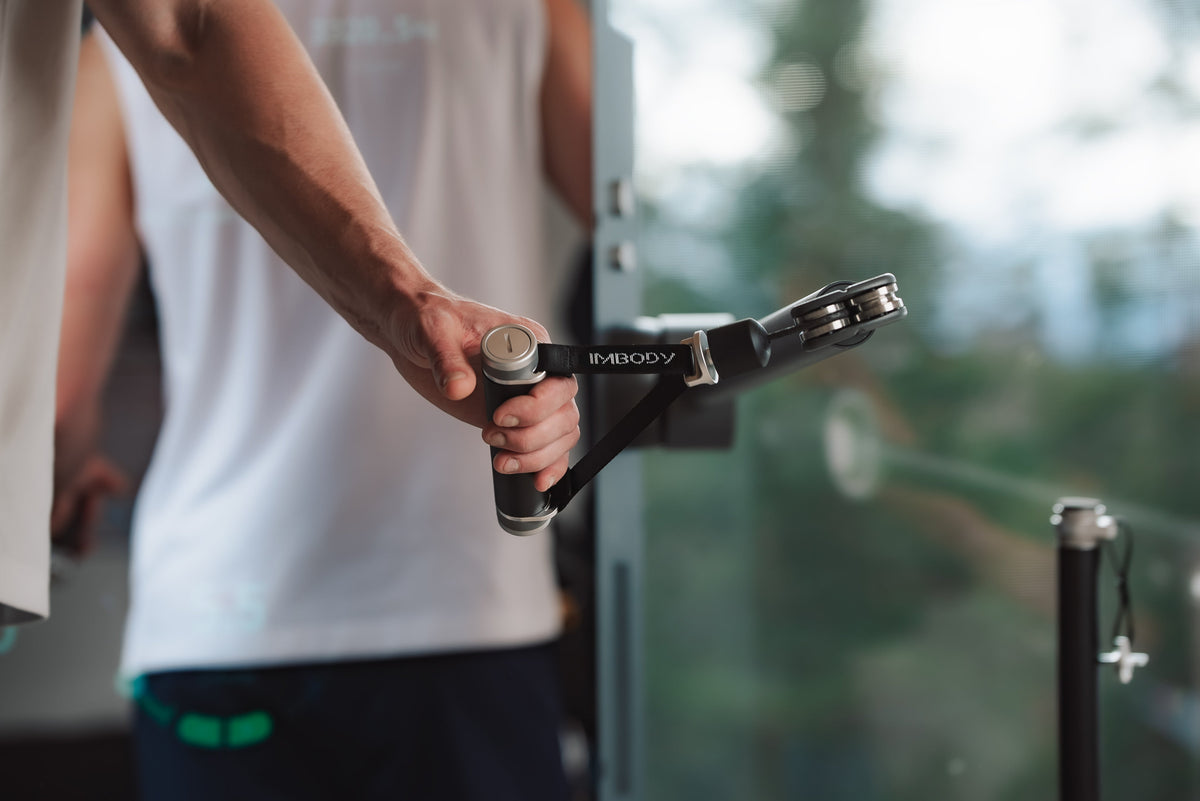
You do not need to train every day to build a meaningful strength routine.
For many people, three well-planned sessions each week can provide enough structure to train the whole body while still leaving room for work, family, recovery, and everything else happening outside fitness.
The key is not making each workout as complicated as possible.
It is creating a routine you can realistically return to week after week.
That idea closely matches the IMBODY approach to home fitness: consistency first, thoughtful progression second, unnecessary complexity last.
Why a 3-Day Strength Routine Works Well at Home
A three-day schedule creates a useful middle ground.

It offers more training opportunities than a once-a-week routine without asking fitness to occupy most days of your calendar.
For someone with a busy schedule, that can make a major difference.
A typical week might look like:
- Monday: Strength workout
- Tuesday: Rest or lighter movement
- Wednesday: Strength workout
- Thursday: Rest or lighter movement
- Friday: Strength workout
- Weekend: Recovery, walking, mobility, recreation, or other activities
The exact days are flexible.
What matters more is creating enough space between sessions for the routine to feel sustainable.
Consistency Matters More Than a Complicated Program
The American College of Sports Medicine updated its resistance-training guidance in 2026 after reviewing evidence from more than 30,000 participants.
One of its clearest conclusions was that the biggest opportunity for most adults is not finding the perfect training technique.
It is consistently participating in resistance training.
ACSM also emphasizes training all major muscle groups at least twice per week while adapting the program to individual goals, preferences, and ability to maintain it.
That makes a three-day full-body structure especially practical.
Instead of dividing the body into many specialized workout days, each session can include several fundamental movement patterns.
Start With Movement Patterns, Not a Long Exercise List
A home strength routine does not need dozens of exercises.

A simpler approach is to organize each session around several major movement patterns:
- Squat or knee-dominant movement
- Hinge or hip-dominant movement
- Push
- Pull
- Core or stability work
These categories help cover major areas of the body without requiring every workout to contain every possible exercise.
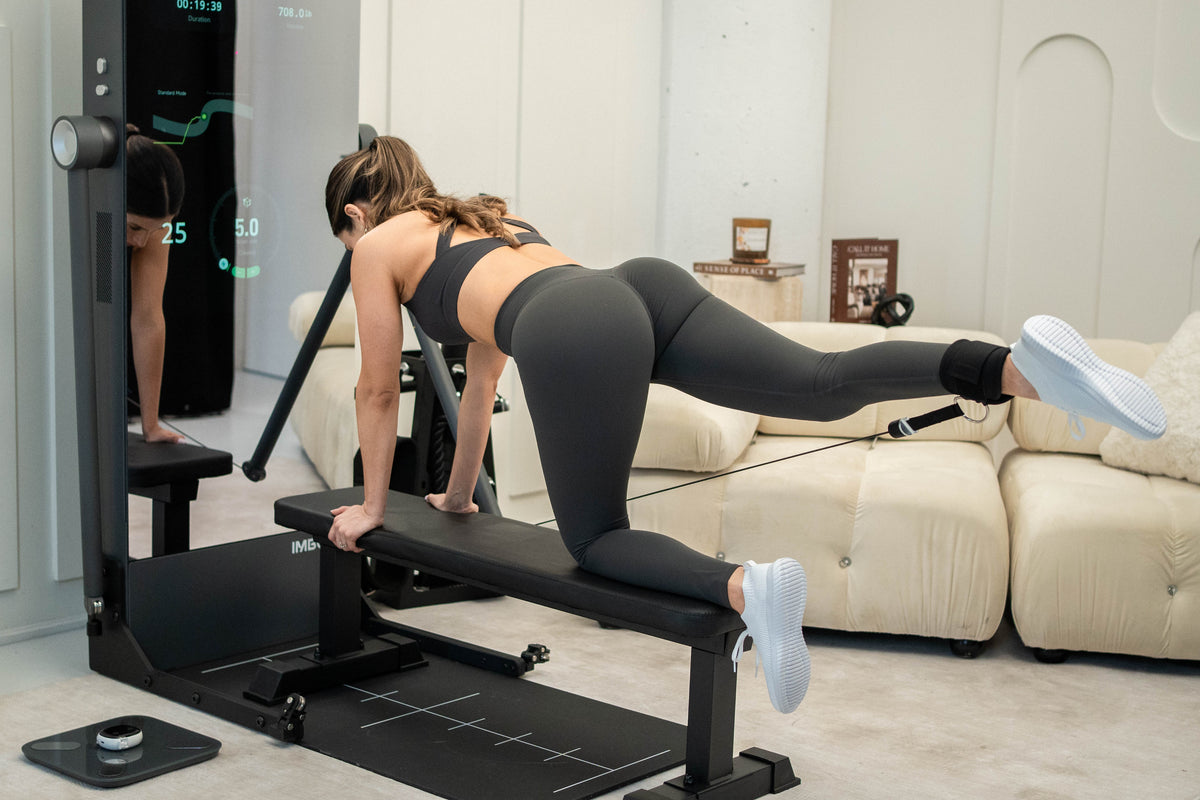
With IMBODY Power S, adjustable smart arms, motor-driven digital resistance, and different training accessories can support multiple movement patterns within one connected system.
That makes it easier to build a full-body home routine without moving between a room full of separate machines.
Day 1: Build the Foundation
The first workout of the week can focus on straightforward full-body movements.
An example structure might include:
- Lower body: squat variation
- Push: chest press variation
- Pull: row variation
- Lower body: hinge or deadlift pattern
- Core: controlled stability movement
The goal is not to exhaust every muscle group.
It is to create a balanced session that gives the body a useful training stimulus while leaving room for the rest of the week.
For beginners, fewer exercises performed with attention and control may be more useful than filling the workout with extra movements.
Day 2: Change the Angles
The second workout can train similar areas of the body while changing the movement variation or direction of resistance.
For example:
- Lower body: split squat or another unilateral movement
- Push: standing or angled press
- Pull: a different row or pulling angle
- Lower body: hip-focused movement
- Core: rotational or anti-rotational movement
Variation does not need to mean completely redesigning the workout.
Changing the resistance angle, stance, attachment, or exercise variation can create a different training experience while keeping the overall structure familiar.
This is one advantage of the adjustable smart arms on IMBODY Power S: resistance can be positioned differently depending on the movement.
Day 3: Bring the Week Together
The third session can return to a full-body structure while using movements that complement the first two workouts.
For example:
- Lower body: squat or hinge variation
- Pull: upper-body pulling movement
- Push: press variation
- Lower body: accessory or single-leg movement
- Core: stability-focused movement
By the end of the week, the major muscle groups have been trained repeatedly without requiring a separate day for every body part.
This keeps the program relatively simple while still creating room for variety.
How Much Resistance Should You Use?
There is no single resistance level that works for everyone or every exercise.
ACSM's updated guidance emphasizes that training variables should be individualized according to goals and the person performing the program.
The resistance used for a squat may be very different from the resistance used for an upper-body movement or a core exercise.
IMBODY Power S allows resistance to be adjusted in precise 0.5 kg increments.
That makes it possible to make smaller changes rather than forcing every progression to happen through a large increase.
For IMBODY, progression should be something users can build gradually—not something that needs to be rushed.
You Do Not Need to Train to Failure Every Session
One useful takeaway from ACSM's 2026 update is that many advanced resistance-training techniques are optional for the average healthy adult.

The evidence review found that approaches such as consistently training to momentary muscle failure or using complex periodization were not necessary to produce meaningful results for general health and fitness.
This is important for anyone building a home routine.
You do not need to turn every workout into a maximum-effort test.
A repeatable training routine can prioritize controlled movement, appropriate challenge, and consistent participation.
Progress by Making Small Changes
A three-day plan should not stay exactly the same forever, but progression does not need to be dramatic.
Over time, progress might involve:
- Increasing resistance slightly
- Performing an additional repetition when appropriate
- Improving movement control
- Using a different movement variation
- Training through a more comfortable range of motion
- Becoming more consistent from week to week
With IMBODY Power S, precise resistance adjustment makes small increases easier to apply when additional challenge is appropriate.
The important point is that progression should support the routine—not make the routine impossible to maintain.
What If You Do Not Know Which Exercises to Choose?
This is where many workout plans become more complicated than they need to be.
People often understand that they should train regularly but still face the same question every time they start:
What should I do today?
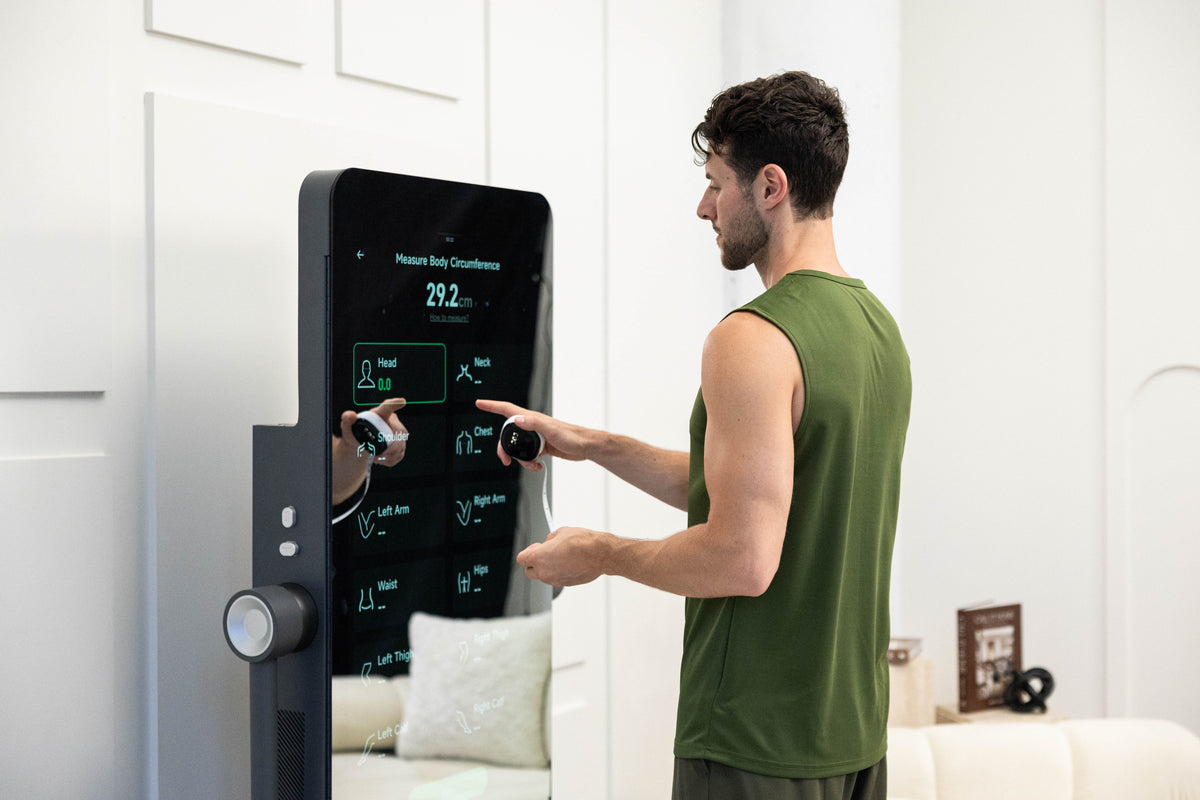
Through the IAC® intelligent training system, IMBODY can provide workout recommendations based on information such as the user's assessment, goals, fitness level, and training history.
This reduces the need to manually design every session.
Instead of spending time comparing dozens of workout templates, users can follow a more structured training experience and focus on the movement itself.
Your 3-Day Routine Should Still Be Personal
A three-day schedule is a framework, not a universal prescription.
ACSM's updated guidance specifically emphasizes moving away from rigid one-size-fits-all programs.
A useful routine should reflect factors such as:
- Your current fitness level
- Your goals
- Your training experience
- The movements you enjoy
- Your available time
- Your ability to recover between sessions
Someone new to strength training may use a simpler routine and lighter resistance.
A more experienced user may choose greater resistance, additional volume, or more challenging variations.
The structure can stay recognizable while the details change with the individual.
Home Training Removes One More Barrier
The best three-day workout plan still has to fit into the week.

This is where home training can make the routine easier to maintain.
There is no commute, no need to wait for equipment, and less setup between deciding to exercise and beginning the session.
If Wednesday becomes unexpectedly busy, a home workout may be easier to move to the morning or evening rather than abandon altogether.
For IMBODY, that flexibility is one of the biggest advantages of smart home fitness.
Fitness becomes something that can move with the rest of your schedule.
What About the Days Between Workouts?
A three-day strength routine still leaves four other days each week.
Those days do not need to become additional hard workouts.
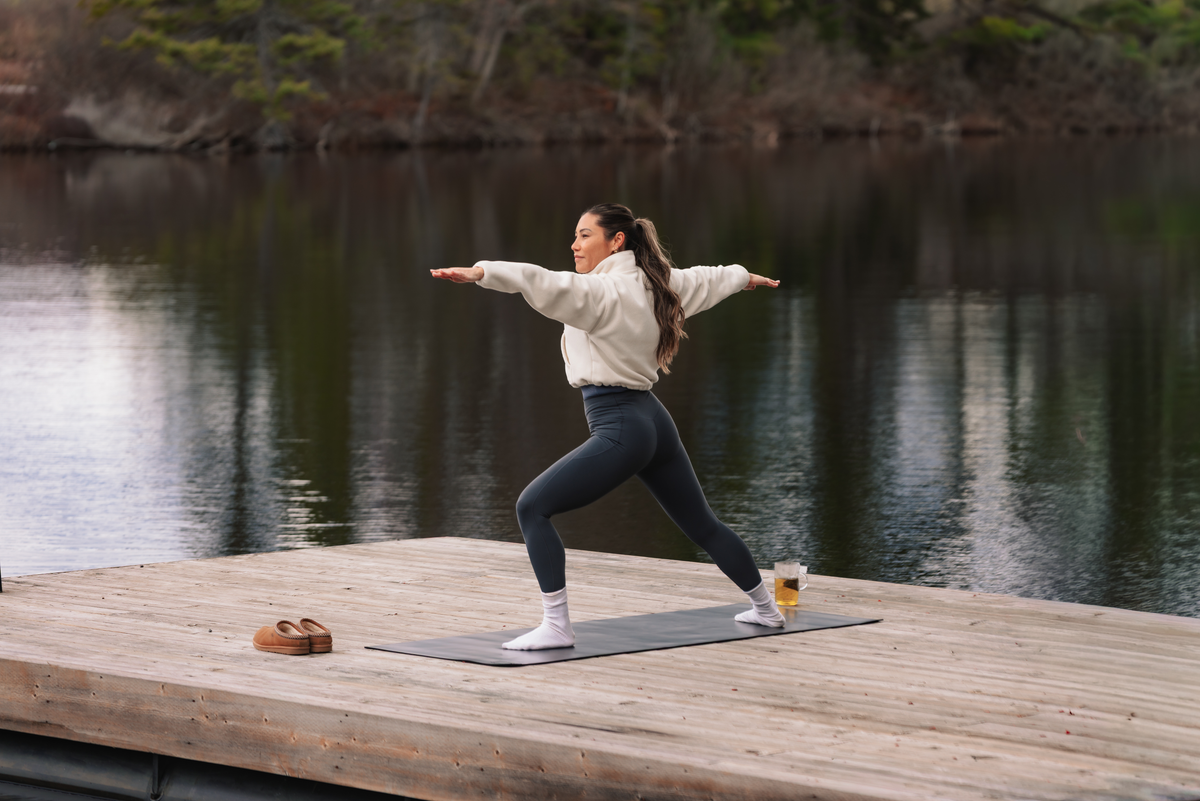
Depending on your preferences, they can include lighter movement such as walking, mobility work, recreational activity, or simply recovery.
A sustainable routine leaves enough room for the body—and the schedule—to reset before the next strength session.
More activity is not automatically better if it makes the overall routine harder to continue.
A Simple Weekly Framework
If you want a straightforward place to begin, think of the week like this:
- Workout 1: Full body — foundational movements
- Workout 2: Full body — different angles and variations
- Workout 3: Full body — complementary movements and gradual progression
Then allow the exercises, resistance, and training volume to evolve according to your individual needs.
This keeps the structure easy to understand without turning it into a rigid formula.
Final Thoughts
A good 3-day strength routine at home does not need to be complicated.
Start with major movement patterns. Train the whole body regularly. Choose resistance that fits the exercise. Progress gradually. Leave space for recovery. Most importantly, build a schedule that you can realistically maintain.
That principle is strongly reflected in ACSM's 2026 resistance-training guidance: for most adults, consistency matters more than unnecessary complexity.
With versatile digital resistance, adjustable smart arms, personalized workout guidance, and connected progress tracking, IMBODY Power S is designed to make that kind of structured home routine easier to follow.
For IMBODY, the best workout plan is not the one that looks the most impressive on paper.
It is the one that keeps finding a place in your week.
Explore IMBODY Power S
Discover how IMBODY Power S combines intelligent workout guidance, precise digital resistance, and versatile full-body training to support a more consistent strength routine at home.
Reference
American College of Sports Medicine — 2026 Resistance Training Guidelines Update
Share:
Why Core Strength Matters Beyond Abs: Stability, Balance and Everyday Movement
Why Recovery Days Are Part of Progress — Not Time Off