


Choosing between a home gym and a gym membership is not really about deciding which one is universally better.
It is about understanding which environment makes it easier for you to train consistently.
A commercial gym may offer more equipment, classes, and a social atmosphere. A home gym can offer privacy, convenience, and the freedom to train on your own schedule.
For IMBODY, the most useful question is simple: which option fits more naturally into the way you actually live?
Home Gym vs Gym Membership: Start With Your Routine
It is easy to compare gyms by equipment lists or monthly costs, but your routine often matters more.

If getting to a gym already fits naturally into your day, a membership can provide access to a broad fitness environment.
If commuting, waiting for equipment, or fitting gym hours around work creates friction, training at home may feel easier to maintain.
Angi's comparison of home and commercial gyms reaches a similar conclusion: the better choice depends on your goals, budget, preferences, and whether you value privacy or a more social environment.
That makes consistency a useful lens for comparing the two.
Where a Gym Membership Has an Advantage
Commercial gyms can offer something that is difficult to fully reproduce at home: variety at scale.
Depending on the facility, members may have access to:
- Large selections of strength equipment
- Cardio machines
- Group fitness classes
- Specialized training areas
- Saunas, pools, or other amenities
- A social fitness environment
For someone who enjoys leaving the house to exercise, meeting other people, or regularly using specialized equipment, these benefits can be meaningful.
A commercial gym can also create a clear separation between home life and workout time.
Where a Home Gym Has an Advantage
A home gym changes the experience in a different way.

The biggest advantage is access.
There is no commute, no opening schedule to work around, and no need to wait for another person to finish using the equipment you planned to train with.
Home fitness can also offer more privacy and more control over the training environment.
For busy professionals, apartment residents, parents, or anyone whose schedule changes frequently, that convenience can reduce the number of steps required to begin a workout.
This is where IMBODY sees the real value of home fitness: not simply owning equipment, but making movement easier to access.
Time Is Part of the Cost Too
When comparing a home gym with a gym membership, price is only one form of cost.
Time matters too.
A gym session may include:
- Getting ready to leave
- Driving or commuting
- Parking
- Waiting for equipment
- Travelling home afterward
For some people, none of these steps are a problem. Going to the gym may even be an enjoyable part of the routine.
For others, those extra steps can turn a 30-minute workout into a much larger commitment.
A home gym reduces that transition time. The workout can begin much closer to the moment you decide to move.
Space Changes the Home Gym Equation
Traditional home gyms also have limitations.
Weights, benches, racks, cable machines, and cardio equipment can quickly occupy a significant amount of space.
That makes the home gym decision more complicated for people living in apartments, condos, or multipurpose spaces.
Smart home fitness systems approach this problem by trying to combine more training functions into fewer pieces of equipment.
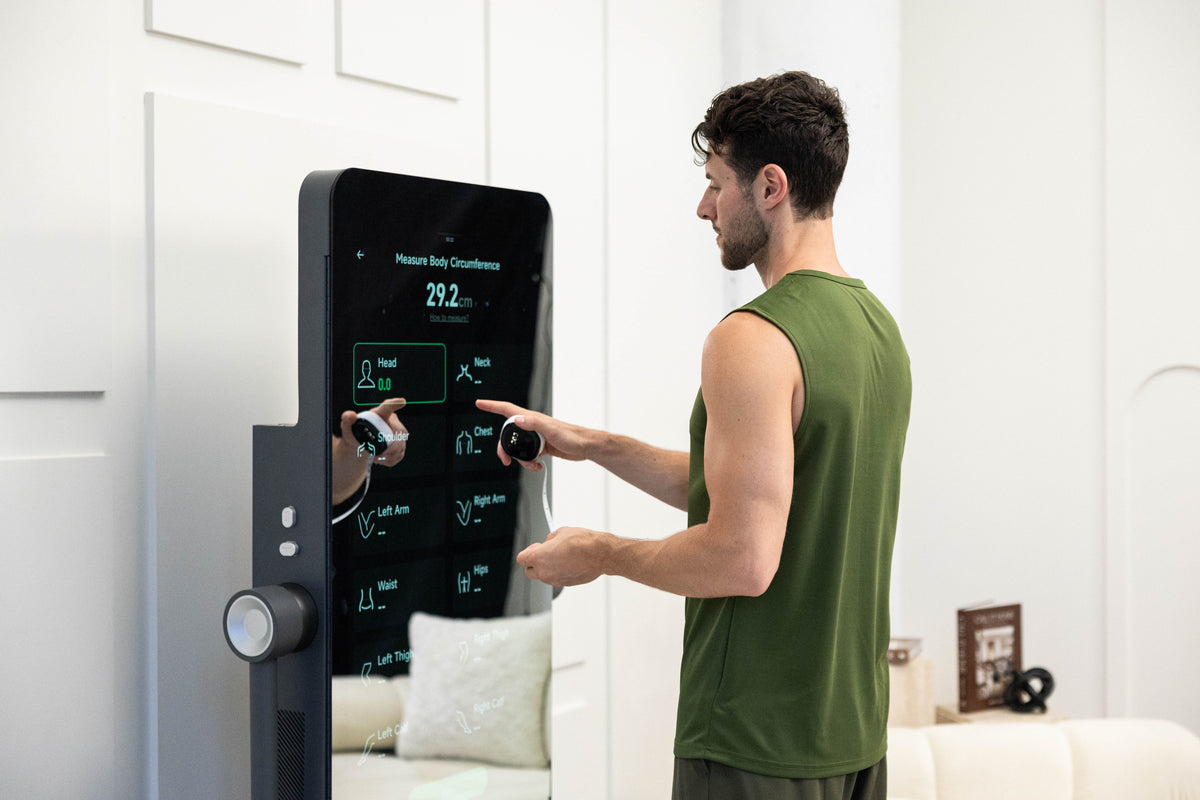
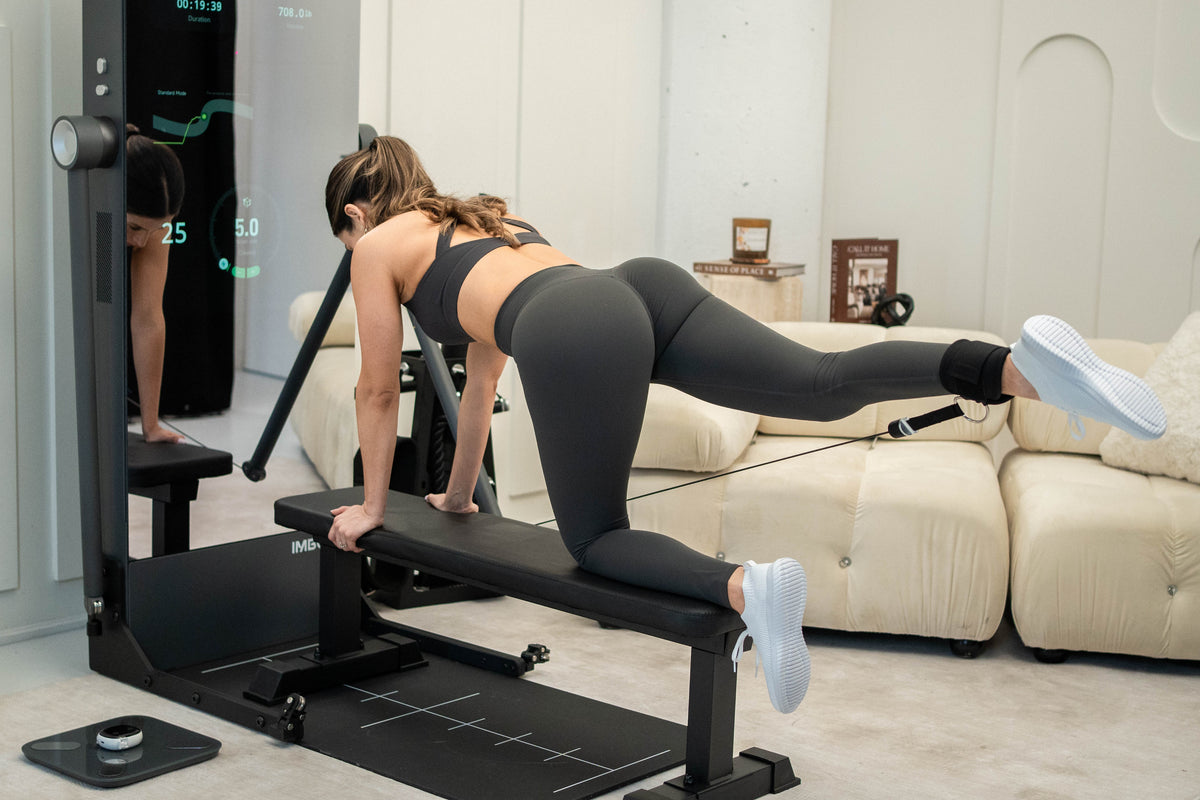
IMBODY Power S, for example, combines digital resistance, adjustable smart arms, guided workouts, progress tracking, and a 43-inch smart fitness mirror within one connected system.
For IMBODY, the goal is not to recreate a commercial gym at home. It is to create enough training versatility to support a useful routine without asking the home to become a gym.
Equipment Variety vs Equipment Relevance
A commercial gym will usually have more total equipment than a home gym.
But more equipment does not automatically mean every user needs all of it.
A better question is whether the equipment available supports the movements and training styles you actually use.
For strength-focused home users, a connected system can cover many foundational patterns such as:
- Squatting
- Hinging
- Pushing
- Pulling
- Core training
- Upper- and lower-body accessory movements
IMBODY Power S uses adjustable smart arms and multiple accessories to create different movement positions within one system.
The emphasis shifts from owning the largest equipment collection to having enough flexibility to support the routine you actually follow.
Guidance Is Another Part of the Comparison
A gym membership gives you access to equipment, but the workout plan may still be entirely up to you unless you also use a trainer or structured class.
At home, that planning challenge can become even more noticeable.
This is why intelligent guidance is an important part of the IMBODY approach.
Through the IAC® intelligent training system, Power S can provide workout recommendations based on information such as the user's assessment, goals, and training history.
Instead of spending time deciding which exercises to combine, users can follow a more structured path.
For someone comparing a smart home gym with a conventional gym membership, this guidance can be just as relevant as the hardware itself.
Think About Privacy and Social Motivation
Some people perform better when others are around them.
The energy of a busy gym, seeing other people train, or attending group classes can make exercise more enjoyable and motivating.
Others prefer privacy.
They may feel more comfortable learning new movements, training at their own pace, or fitting short workouts into the day without going somewhere public.
Neither preference is more correct.
The important question is which environment makes you more likely to continue.
Think About Cost Over More Than One Month
A gym membership typically has a lower upfront cost but creates an ongoing monthly expense.
A home gym usually requires a larger initial investment.
Angi notes that commercial gym memberships can range widely in price, while home gyms often cost more upfront but may become more economical over longer periods depending on the setup.
The comparison therefore depends heavily on what you buy, which gym you would otherwise join, how long you use either option, and whether there are additional fees.
It is worth evaluating the full experience rather than comparing only the first month's cost.
Power S Core or Elite: Which Home Setup Fits You?
For users considering IMBODY Power S, the bundle can also be matched to how they expect to train at home.
The Power S Core bundle is suited to users who want the essential IMBODY smart home fitness experience with a streamlined setup.
The Power S Elite expands the setup with additional accessories for users who want greater training variety within the same connected system.
Neither changes the central advantage of home training: the equipment is already there when you are ready to use it.
You Do Not Have to Choose Only One
The home gym vs gym membership decision does not always need to be all or nothing.

Some people use home fitness for most weekly workouts while maintaining access to a commercial gym for specific equipment, classes, swimming, or social training.
This hybrid approach can work especially well for people who value the convenience of home fitness but still enjoy parts of the gym experience.
The better fitness routine is the one that fits your life—not the one that follows a rigid category.
Which Option Fits Your Routine Better?
A commercial gym may fit you well if you value:
- Large equipment variety
- Group classes
- Social interaction
- Specialized facilities
- A dedicated place away from home to train
A home gym may fit you well if you value:
- Training on your own schedule
- No commute
- Privacy
- No waiting for equipment
- A more personalized environment
- Easier access to shorter or more frequent sessions
The most important factor is not which list is longer.
It is which set of advantages removes the barriers that most often stop you from training.
Final Thoughts
There is no universal winner between a home gym and a gym membership.
Commercial gyms provide variety, community, and specialized facilities. Home gyms provide convenience, privacy, and control over when and how you train.
For IMBODY, home fitness is valuable when that convenience translates into greater consistency.
With digital resistance, personalized guidance, smart arms, and connected progress tracking, IMBODY Power S is designed to create a more complete home training experience without requiring a room full of traditional equipment.
The best choice is ultimately the one that helps movement fit into your life often enough to become part of it.
Explore IMBODY Power S
Discover how IMBODY Power S combines intelligent workout guidance, versatile digital resistance, and connected fitness for a more flexible home training routine.

Share:
Strength and Mobility: Why a Balanced Fitness Routine Needs Both
Why Core Strength Matters Beyond Abs: Stability, Balance and Everyday Movement