


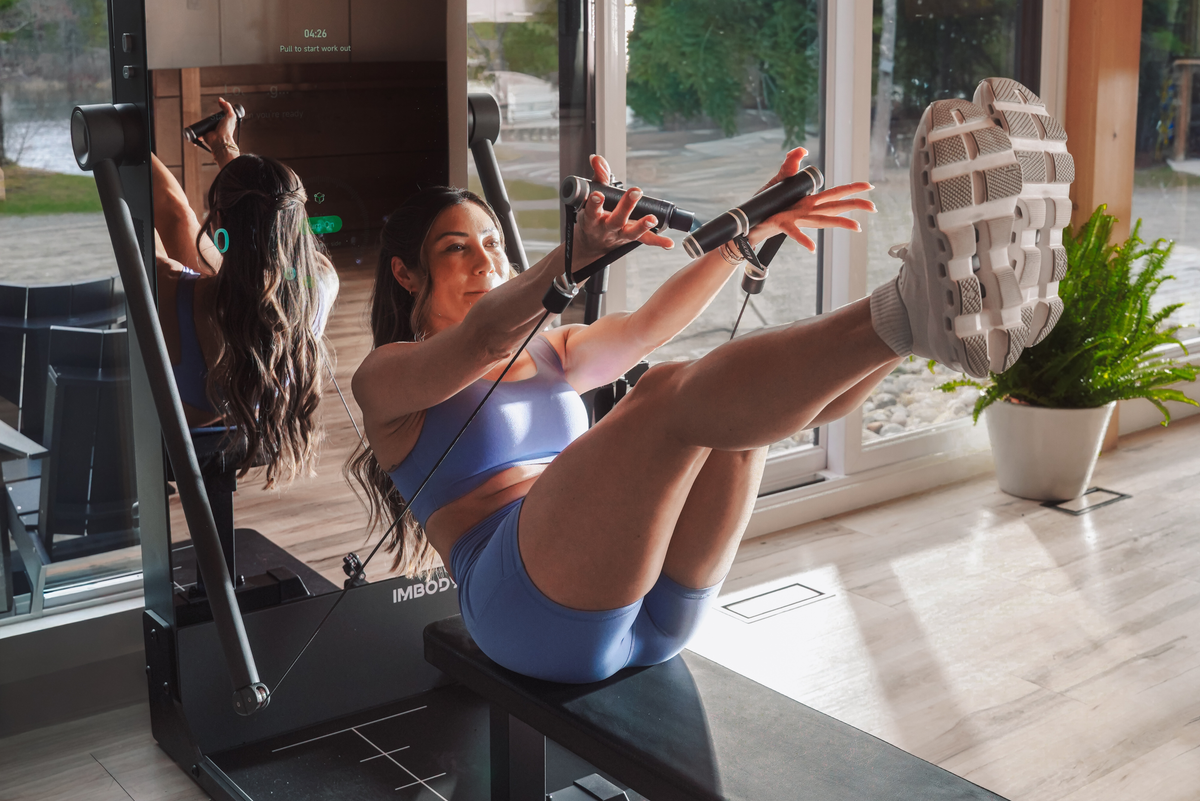
Buying a smart home gym is not only a hardware decision.
For many connected fitness products, the purchase can also involve a monthly subscription for workouts, coaching features, training programs, performance tracking, or other digital services.
That does not automatically make a subscription good or bad.
The more useful question is whether the ongoing cost matches the experience you expect to use—and what happens to your equipment if you decide to stop paying.
At IMBODY, we believe buyers should understand the complete ownership experience before bringing smart fitness technology into their home.
Why Do Some Smart Home Gyms Require a Subscription?
A smart home gym combines physical equipment with digital features.

Depending on the platform, a subscription may help fund services such as:
- Guided workout libraries
- New classes and training programs
- AI-powered recommendations
- Performance tracking
- Progressive workout programming
- Live or on-demand coaching
- Multiple user profiles
For someone who frequently uses those services, an ongoing membership can provide meaningful value.
The key is knowing which features require the subscription and whether those are features you expect to use over the long term.
Start With the Hardware Price—But Don't Stop There
The price shown on a product page is usually the easiest number to compare.
But it may not represent the complete cost of owning a smart home gym.
A useful comparison should consider:
- Initial equipment price
- Required monthly or annual subscription
- Accessories
- Delivery or installation
- Optional upgrades
- Long-term software costs
A 2026 five-year cost analysis from FitAtHome illustrates why this matters. Its comparison shows that recurring subscription charges can become a meaningful part of total ownership cost when they continue over several years.
The specific numbers vary widely between products, so buyers should calculate the total cost based on the system they are actually considering rather than comparing sticker prices alone.
Calculate the Cost Over Several Years
A simple way to evaluate a smart home gym is to look beyond the first year.
If a system requires a monthly subscription, you can estimate the longer-term commitment with a simple calculation:
Hardware + required accessories + installation + recurring fees = approximate total ownership cost
For example, even a relatively modest monthly fee becomes a much larger number when multiplied across three or five years.
This does not necessarily mean the subscription is poor value. If you regularly use personalized programming, coaching, classes, or other premium services, those features may justify the ongoing expense.
The important part is making the cost visible before buying.
Ask What Happens If You Cancel
This may be one of the most important questions when comparing smart fitness systems.

If you stop paying for the subscription, what happens to the equipment?
Different products handle this very differently.
Depending on the system, cancelling may mean:
- Losing premium classes while keeping basic resistance functions
- Losing personalized training recommendations
- Losing certain tracking or software features
- Moving into a limited manual training mode
- Losing access to a significant portion of the connected experience
Before purchasing, understand which capabilities belong to the hardware you purchased and which remain dependent on an active membership.
Subscription-Free Does Not Mean Technology-Free
A common misconception is that a smart home gym without a subscription must offer a more basic experience.
That is not necessarily the case.
IMBODY Power S combines smart hardware and software without requiring a monthly subscription.
The system includes features such as AI-powered personalized training, connected workout tracking, digital resistance, five training modes, dual-user profiles, and its integrated smart fitness experience without adding a recurring monthly membership fee.
For IMBODY, intelligent fitness is part of the product experience rather than something that needs to be continuously unlocked through a monthly payment.
Think About What You're Actually Paying For
Subscription comparisons become more useful when you separate the physical equipment from the ongoing service.
Ask yourself:
- Am I primarily paying for workout content?
- Am I paying for personalized programming?
- Does the membership unlock important hardware functions?
- Are new classes added frequently enough to matter to me?
- Would I use live coaching or community features?
- Would I still want to use the machine if I cancelled?
There is no universal correct answer.
A user who loves instructor-led classes may place significant value on a content subscription.
Someone who mainly wants flexible strength training, personalized guidance, and control over their own schedule may prefer a system without an ongoing membership requirement.
Consider How Long You Expect to Keep the Equipment
The longer you own connected fitness equipment, the more important recurring fees become.
A subscription that feels relatively small each month can represent a much larger cost over several years.
This matters especially for home fitness equipment because it is usually purchased as a long-term addition to the home rather than a short-term service.
If you expect to use a smart home gym for five years or more, comparing long-term ownership costs can provide a more realistic picture than comparing only the initial purchase price.
For IMBODY, removing the monthly subscription helps make that cost structure simpler: users purchase the Power S system without adding another recurring fitness membership.
Don't Compare Cost Without Comparing Use
Total cost matters, but price alone does not tell you whether a home gym provides good value.

Usage matters too.
A lower-priced system that rarely gets used may provide less practical value than a more expensive system that becomes part of a consistent weekly routine.
When comparing options, consider:
- How often you realistically expect to train
- Whether the system fits into your daily routine
- How many people in your household will use it
- Whether it supports the kinds of workouts you enjoy
- How easy it is to begin a session
This is especially relevant for IMBODY Power S, which supports dual-user profiles. If two people in the household regularly use one system, the value calculation may look different from equipment purchased for a single occasional user.
Look Beyond the Subscription to the Training System
A subscription model is only one part of choosing a smart home gym.
The hardware still needs to support the way you want to move.
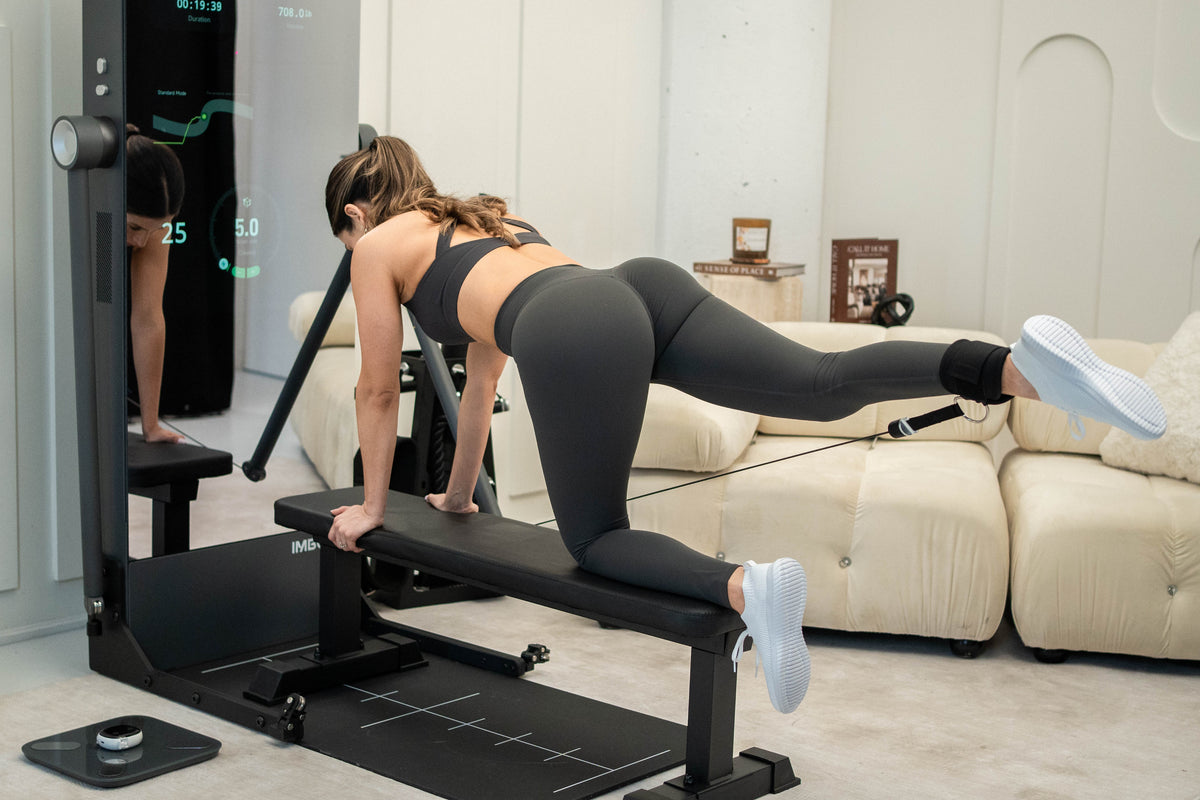
IMBODY Power S provides up to 260 lbs of motor-driven digital resistance with precise 0.5 kg adjustments, adjustable smart arms, five training modes, and a 43-inch smart fitness mirror.
These features allow one system to support different strength movements and resistance levels without requiring a large collection of physical weight plates or separate machines.
When evaluating any smart home gym, look at both sides of the experience:
What can the hardware do—and what does the software help you do with it?
Personalized Guidance Can Be Part of the Ownership Experience
One reason people choose smart equipment over traditional strength equipment is guidance.
A rack, cable machine, or dumbbell set can provide excellent resistance training, but it does not necessarily tell you what workout to do next.
Through the IAC® intelligent training system, IMBODY can provide personalized workout recommendations based on information such as the user's assessment, goals, fitness level, and training history.
This helps connect the equipment itself with the planning side of training.
Importantly, Power S users do not need to add a monthly subscription to continue accessing the core IMBODY smart fitness experience.
Core, Elite or Apex: The Same Subscription-Free Foundation
Power S is available in three bundle configurations designed around different levels of training variety.
The Power S Core bundle is designed for users who want the essential IMBODY training experience with a streamlined setup.
The Power S Elite bundle expands the setup for users who want additional training possibilities and accessories.
The Power S Apex offers the most complete Power S configuration for users looking for a broader home fitness setup.
Regardless of bundle, the underlying IMBODY smart fitness experience does not require a monthly subscription.
That means the bundle decision can focus primarily on how much training variety and which accessories fit your needs rather than which software tier you want to continue paying for.
When a Subscription Might Make Sense
A subscription-based smart gym can still be the right choice for some users.
It may make sense if you place high value on:
- Frequently updated instructor-led classes
- Live workouts
- Community challenges
- Premium coaching services
- A particular instructor or content ecosystem
If those experiences motivate you to train consistently, the subscription may be worthwhile.
The goal should not be to avoid every recurring fee.
It should be to understand what you receive in exchange for it.
When a No-Subscription Home Gym May Fit Better
A smart home gym without a monthly subscription may be especially appealing if you prefer:
- A more predictable long-term cost
- Access to smart features without another recurring bill
- Training primarily on your own schedule
- Owning the fitness system rather than continually paying for access
- Using the same system over many years
For users who already pay for streaming services, apps, memberships, and other digital subscriptions, reducing one recurring commitment can also make the ownership experience feel simpler.
Questions to Ask Before Buying a Smart Home Gym
Before making a purchase, consider asking these questions:
- Is a subscription required or optional?
- How much does it cost per month and per year?
- Can that price change?
- Which features require an active subscription?
- What still works if I cancel?
- Are personalized workouts included?
- Is progress tracking included?
- Are multiple user profiles included?
- Are accessories included or purchased separately?
- What will the approximate cost be after three or five years?
These questions can reveal much more about long-term value than the hardware price alone.
Think in Terms of Ownership, Not Just Checkout
Smart fitness equipment sits somewhere between a physical product and a digital service.
That makes ownership more complicated than buying traditional weights.
Before purchasing, it is worth understanding whether you are buying a complete training system or buying hardware that requires an ongoing service to deliver the experience you expected.
Neither model is automatically better.
They simply create different relationships between the user, the hardware, and the software.
IMBODY takes the approach that the connected training experience should remain part of Power S ownership without requiring an additional monthly membership.
Final Thoughts
You do not necessarily need a subscription to have a smart home gym.
Some platforms use recurring memberships to provide classes, coaching, personalization, and connected software. For users who value those services, that model can make sense.
Other systems build more of the smart experience directly into ownership.
IMBODY Power S combines digital resistance, intelligent workout guidance, connected tracking, dual-user profiles, and multiple training modes with no monthly subscription.
When comparing smart home gyms, look beyond the initial price and ask what the system will cost—and what it will still allow you to do—years after it arrives in your home.
For IMBODY, smart home fitness should make the routine simpler.
The ownership experience should too.
Explore IMBODY Power S
Compare Power S Core, Elite and Apex to find the IMBODY smart home gym configuration that fits your space, routine, and training needs—with no monthly subscription required.
References
FitAtHome — Smart Home Gym vs. Traditional Home Gym: 5-Year Cost Analysis


Share:
Why Recovery Days Are Part of Progress — Not Time Off