


Fitness technology can track more information than ever before. Workout history, resistance levels, repetitions, body data, training frequency, and progress can all become part of a growing digital record.
But collecting more numbers does not automatically create a better fitness experience.
The real value of fitness data is what happens next: Can that information help you make a better decision about your training?
At IMBODY, smart fitness tracking is designed around this idea. Data should not simply tell you what you already did. It should help create context for what you can do next.
Fitness Tracking Should Be More Than a Record
Traditional workout tracking often works like a diary.

You complete a session, record the exercises, note the resistance or repetitions, and build a history over time.
That information can be useful, but it still leaves the user responsible for interpreting everything.
Should resistance increase next time? Is the current routine still appropriate? Has training been consistent? What should the next session focus on?
A smarter fitness system should help close the gap between information and action.
Data → Insight → Action
A useful way to think about smart fitness tracking is through three stages:
- Data — understand what happened during training
- Insight — place that information in the context of goals and previous activity
- Action — use that context to help guide what happens next
This is an important distinction.
More data is not necessarily better. More useful data is better.
For IMBODY, the goal is not to surround users with dashboards and numbers. It is to connect fitness information with guidance that makes the next step easier to understand.
Start With an Assessment, Not an Assumption
Useful guidance needs context.
Two users can have the same general fitness goal while starting from very different places. Their body data, fitness level, training history, movement experience, and available time may all differ.
This is why the IMBODY experience begins with assessment.
Assessment information helps establish a starting point before training begins. From there, the system can connect that information with workout recommendations and future training records.
Instead of assuming that every user needs the same routine, the experience starts by understanding the individual.
The IMBODY Assessment → Training → Tracking Loop
One of the key differences between connected fitness and traditional standalone equipment is that the experience does not need to end when the workout ends.

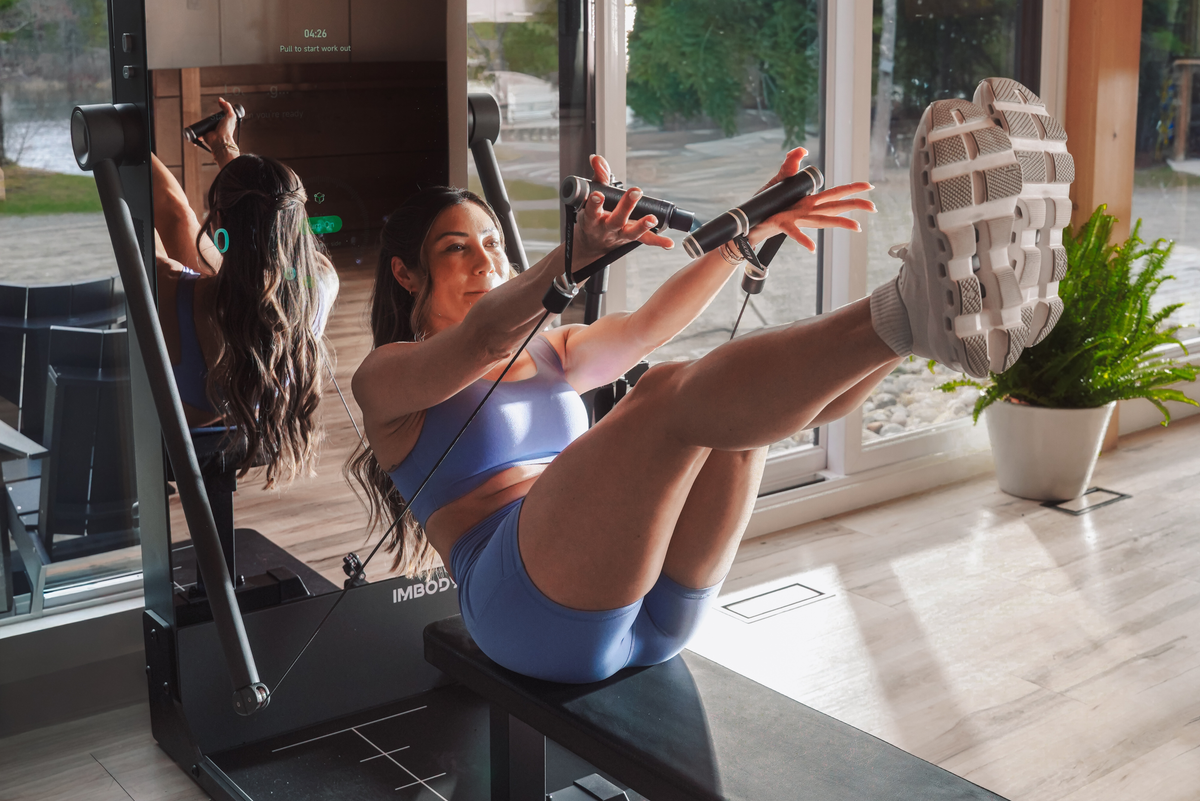
IMBODY Power S is designed around a connected assessment → training → tracking workflow.
The process can be understood simply:
- Assess — establish a clearer picture of the user's starting point
- Train — follow guided workouts and personalized recommendations
- Track — record training information and observe progress over time
- Inform the next step — use that growing context to support future training decisions
This turns fitness tracking into a continuous process rather than a collection of disconnected workout summaries.
Workout History Creates Context
One workout tells you what happened today.
A training history can tell a much more useful story.
Over time, users can begin to understand patterns such as how consistently they have been training, how their resistance has changed, and how their routine has developed.
That context matters because fitness progress rarely happens in a straight line.
Some weeks are more active than others. Energy changes. Schedules change. Goals evolve.
Smart fitness tracking should recognize that reality instead of treating every individual session as a test that must be passed.
Tracking Should Support Progress, Not Create Pressure
More metrics can sometimes make fitness feel more stressful rather than more helpful.
If every number becomes a score to improve, users can lose sight of the larger purpose of training.
At IMBODY, data is better viewed as information rather than judgment.
A lighter session is still a session. Returning after a busy week still matters. Maintaining a routine can be meaningful even when every metric is not moving upward.
The purpose of tracking should be to help users understand their fitness journey—not make them feel evaluated by it.
Intelligent Guidance Makes Data More Useful
This is where the IAC® intelligent training system becomes important.
Rather than leaving users alone with a collection of workout information, IMBODY uses intelligent training guidance to help connect assessment, goals, and training information with personalized workout recommendations.
That can reduce one of the most common sources of friction in home fitness:
What should I do next?
Instead of asking users to interpret every piece of data themselves, intelligent guidance can help provide a clearer starting point for the next workout.
The technology does more of the organizing so the user can focus on moving.
Precision Resistance Adds Another Layer of Training Information
Tracking becomes more meaningful when the training system itself can be adjusted precisely.
 IMBODY Power S supports digital resistance adjustments in 0.5 kg increments, allowing users to make smaller changes as their training develops.
This creates a more gradual approach to progression than relying only on larger jumps between traditional weights.
Instead of treating progress as a dramatic increase from one session to the next, users can build it through smaller, more manageable changes over time.
A Connected System Can Reduce Fragmentation
Fitness information is often spread across different places.
A workout may happen on one piece of equipment, body information may live in another app, and training plans may come from a separate source.
Connected fitness aims to bring more of that experience together.
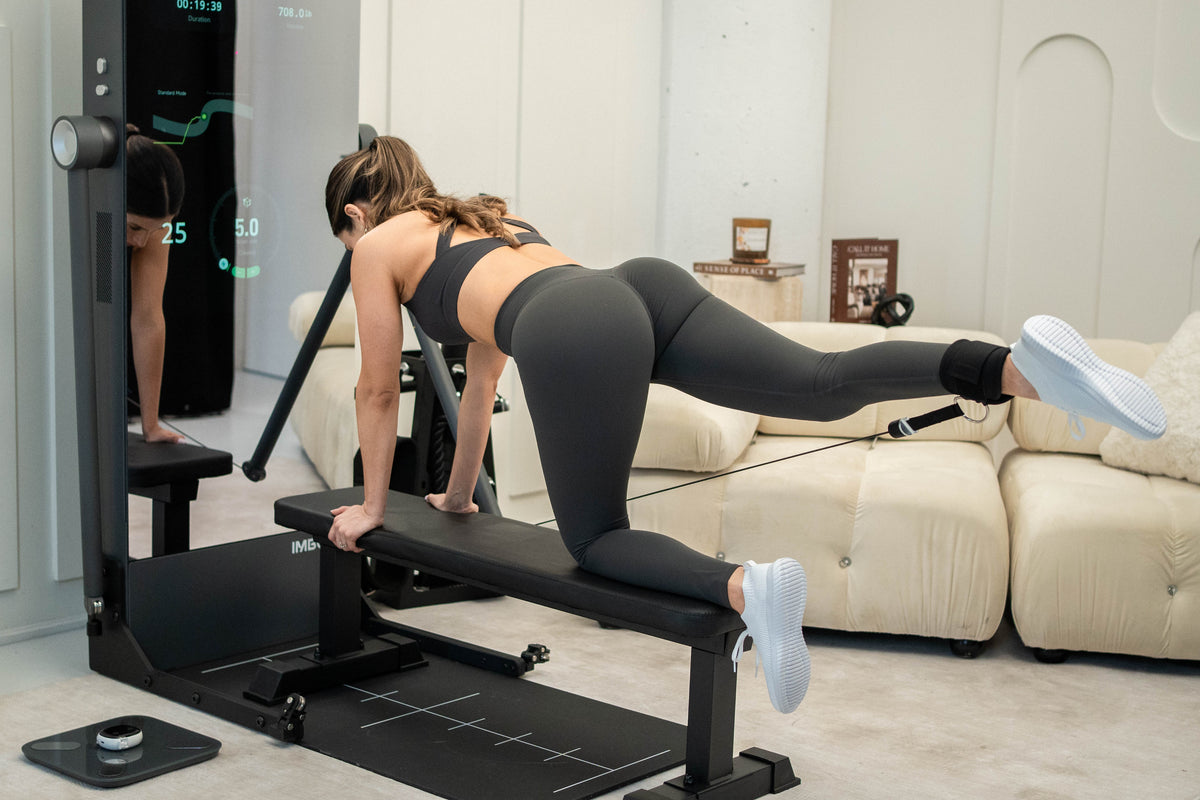
With IMBODY Power S, training hardware, workout guidance, digital resistance, assessment, and progress information exist within the same broader fitness ecosystem.
The benefit is not simply having more technology.
It is reducing the number of disconnected steps between understanding your body, completing a workout, reviewing progress, and deciding what comes next.
What Should Smart Fitness Tracking Actually Do?
When evaluating fitness tracking technology, it can help to ask a few simple questions:
- Does the information help me understand my progress?
- Does it connect individual workouts into a longer-term picture?
- Does it help reduce uncertainty about what to do next?
- Can the experience adapt as my training changes?
- Does tracking feel supportive rather than overwhelming?
If the answer is yes, fitness data becomes more than a collection of numbers.
It becomes part of the training experience itself.
Final Thoughts
The future of fitness tracking is not about displaying more metrics.
It is about making the information we already have more useful.
By connecting assessment, personalized guidance, training history, precise digital resistance, and progress tracking, IMBODY approaches fitness data as part of a continuous feedback loop.
IMBODY Power S is designed to bring those pieces together so users can spend less time interpreting disconnected information and more time building a routine they can actually maintain.
Because the best fitness data does not simply describe the past.
It helps make the next step clearer.
Explore IMBODY Power S
Discover how IMBODY Power S connects intelligent workout guidance, digital resistance, assessment, and progress tracking within one smart home fitness experience.
Reference
American College of Sports Medicine — Worldwide Fitness Trends

Share:
Strength Training for Everyday Life: More Than Building Muscle
Why Strength Training Matters More as We Get Older