


When people imagine a home gym, they often picture a dedicated room filled with equipment: weight racks, benches, dumbbells, cable machines, and storage.
But for many modern homes, the better question is not how much fitness equipment can fit into the space.
It is how easily fitness can fit into everyday life.
A compact home gym can reduce some of the practical barriers between thinking about a workout and actually starting one. At IMBODY, this idea is central to the way we think about modern fitness: the environment should make movement easier to return to, not harder to manage.
Consistency Often Starts With Convenience
Building a sustainable fitness routine is rarely just about motivation.

There are practical decisions around every workout: when to train, where to train, what equipment is available, what exercises to choose, and how much time the entire process will take.
Each additional step creates friction.
Home fitness can remove some of that friction by bringing training closer to the routines that already exist in your day.
A workout can happen before work, between meetings, after dinner, or whenever a realistic window appears.
The easier it is to begin, the easier it can become to build a repeatable routine.
A Home Gym Does Not Need to Recreate a Commercial Gym
Commercial gyms are designed around scale. They have space for different machines, weight stacks, racks, cardio equipment, and specialized training areas.
A home has a different purpose.
It is a place to live, work, rest, spend time with family, and move through everyday routines. Fitness equipment has to coexist with all of that.
This is why simply bringing more gym equipment into the home is not always the most practical solution.
A compact home gym focuses instead on versatility: using fewer pieces of equipment to support more types of movement.
Digital Resistance Changes the Space Equation
Traditional resistance equipment often depends on physical mass.
To create heavier resistance, a system may require additional weight plates or a larger weight stack. Those weights then need to be stored somewhere, whether they are being used or not.
Digital resistance approaches the problem differently.
IMBODY Power S generates resistance through its intelligent resistance system rather than requiring an equivalent amount of physical weight plates.
This allows IMBODY Power S to provide up to 260 lbs of adjustable digital resistance while maintaining a more integrated home fitness format.
For a compact home gym, that difference matters. The goal is not simply to make equipment smaller. It is to make the available space work harder.
One System Can Support Different Movement Patterns
Space efficiency becomes more valuable when one system can support a wider range of exercises.
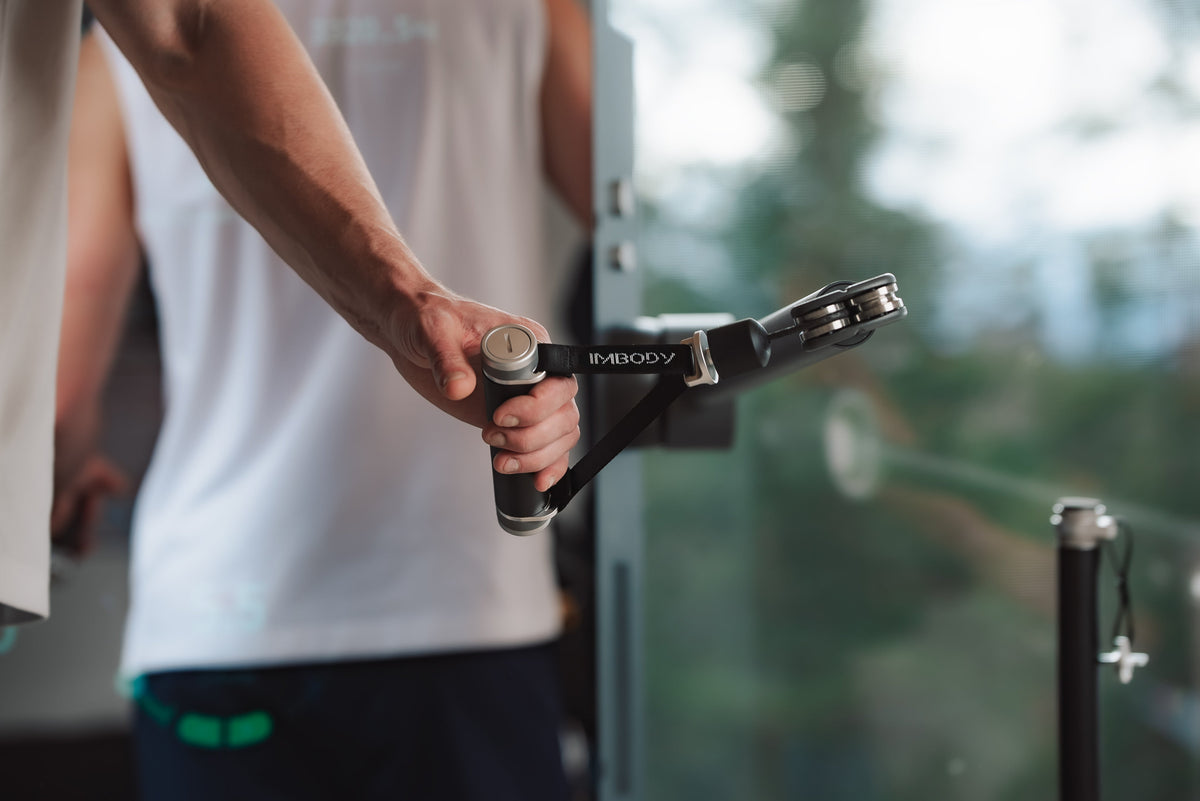
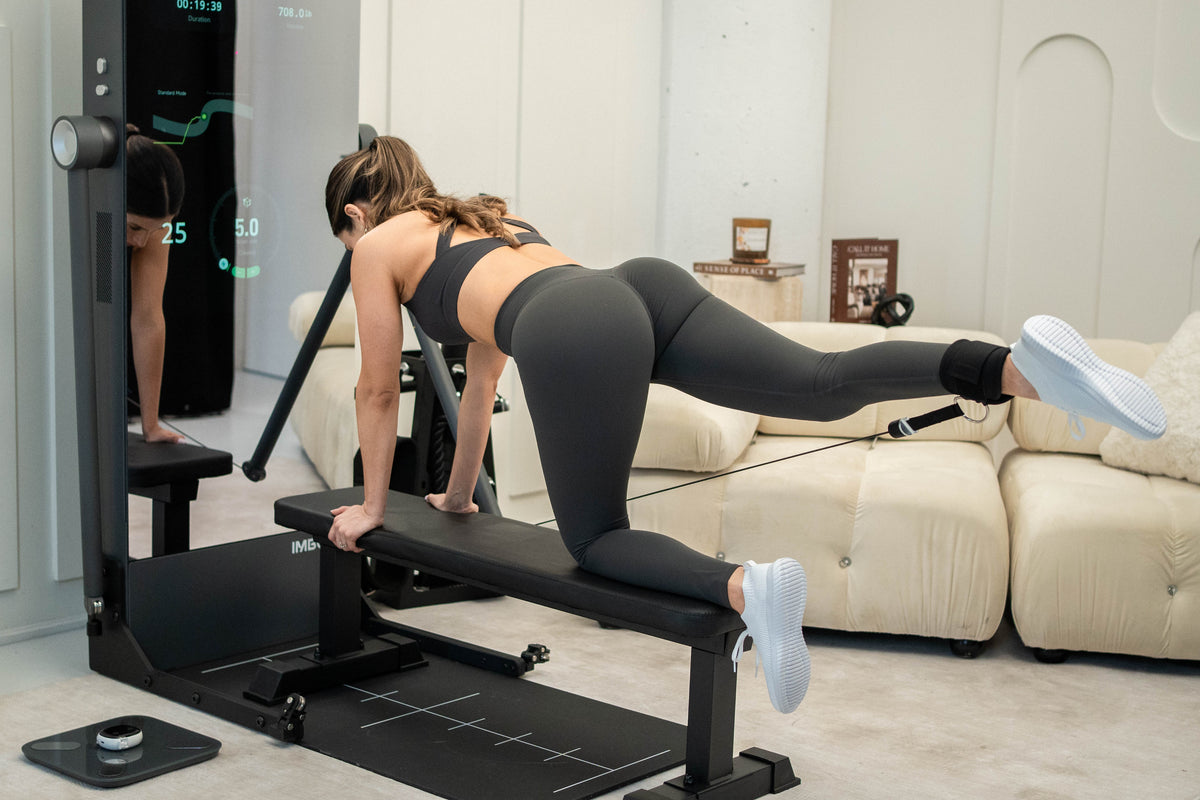
IMBODY Power S combines adjustable smart arms, digital resistance, and multiple training accessories to create different resistance positions and movement possibilities.
Depending on the workout, users can perform movements built around:
- Squatting
- Hinging
- Pushing
- Pulling
- Upper- and lower-body accessory work
- Core and full-body training
Instead of dedicating a separate machine to each movement pattern, the training setup can adapt to the session.
For IMBODY, this is what an all-in-one home gym should accomplish: more useful training possibilities without requiring more equipment for the sake of more equipment.
Less Equipment Can Mean Less Setup
Physical clutter is not the only kind of friction.
There is also setup friction.
Changing plates, moving equipment, finding accessories, setting up multiple stations, and putting everything away again can make a short workout feel like a much larger task.
A more integrated training environment can simplify that process.
With IMBODY Power S, resistance can be adjusted digitally in precise 0.5 kg increments, helping users move between exercises without repeatedly loading and unloading traditional weight plates.
For a busy weekday workout, small reductions in setup can make the overall experience feel much easier to approach.
A Compact Gym Can Still Feel Personal
Reducing equipment does not mean reducing personalization.
In fact, smart home fitness can move some of the personalization away from physical equipment and into software.
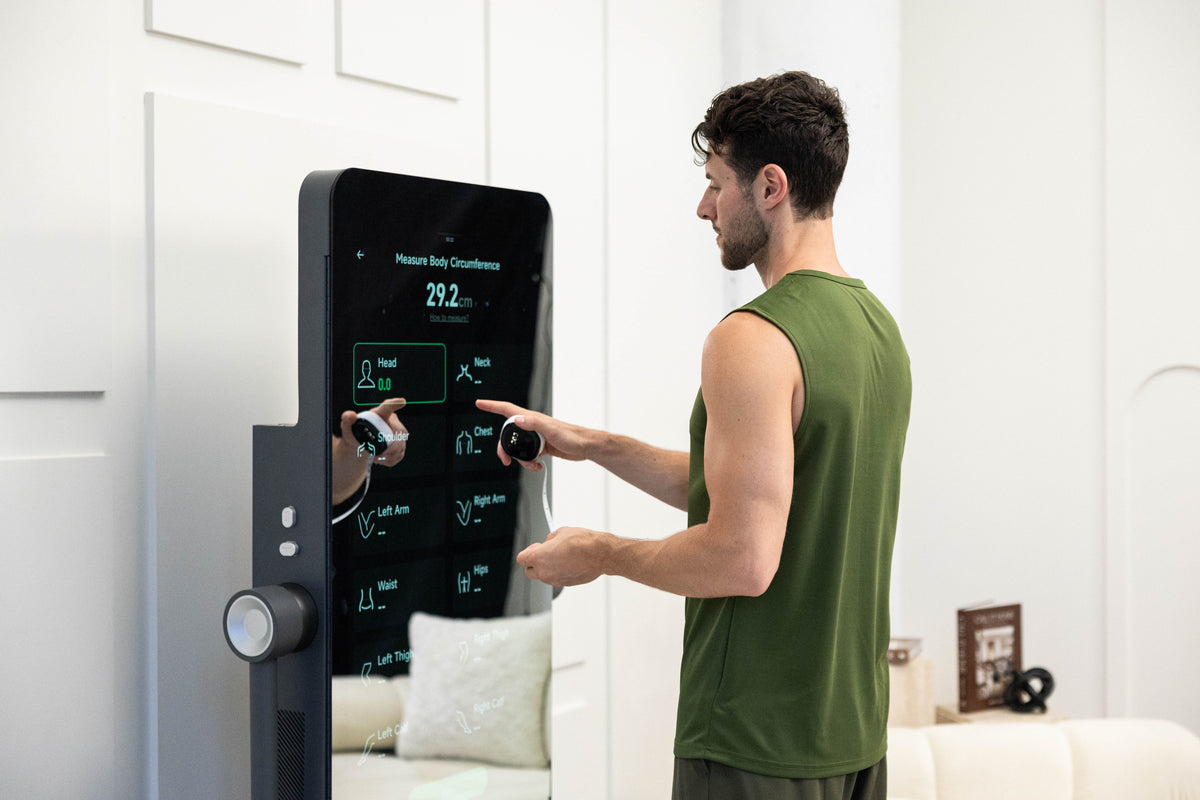
Through the IAC® intelligent training system, IMBODY can provide workout recommendations based on information such as the user's assessment, goals, and training history.
This means the system can support different users without requiring each person to build a completely separate equipment setup.
For households where more than one person trains, this can make a connected home fitness system especially practical.
Compact Fitness Is Also About Visual Space
Fitness equipment does not disappear when the workout ends.
In apartments, condos, and multipurpose rooms, it remains part of the living environment.
That makes visual integration important.
A compact home gym should feel intentional rather than temporary—a fitness environment that can coexist with the rest of the home instead of making the room feel permanently converted into a gym.
This is one reason IMBODY approaches home fitness as both a training experience and part of the modern living environment.
Fitness should have a place in the home without taking over the home.
The Best Setup Is the One You Can Return To
A sophisticated home gym provides little value if using it feels inconvenient.

Consistency depends partly on what happens before the first repetition.
How many steps are required to start?
How much planning is needed?
Does the space need to be reorganized?
Is the equipment ready when you are?
A compact, connected system can help simplify those moments.
When training is already available at home, resistance is adjustable within the system, and workout guidance is ready when needed, there are fewer barriers between intention and movement.
Think Beyond Square Footage
When evaluating a compact home gym, dimensions are important—but they are not the only measure of space efficiency.
It is also useful to consider:
- How many movement patterns the system supports
- How much additional equipment needs to be stored
- How easily resistance can be changed
- Whether workout planning is integrated
- Whether multiple users can share the system
- How naturally the equipment fits into the living environment
A truly space-efficient home gym is not simply compact when measured.
It should also reduce the amount of equipment, setup, and decision-making surrounding the workout.
Final Thoughts
A compact home gym can make consistency easier because it reduces the distance—physically and mentally—between everyday life and movement.

Rather than recreating a commercial gym at home, a more modern approach is to choose a versatile system that supports the movements you need while keeping the environment simple.
With up to 260 lbs of digital resistance, precise 0.5 kg adjustments, adjustable smart arms, intelligent workout guidance, and multiple training possibilities, IMBODY Power S is designed around that idea.
For IMBODY, the future of home fitness is not about filling more space with equipment.
It is about making fitness easier to fit into the space—and the life—you already have.
Explore IMBODY Power S
Discover how IMBODY Power S brings versatile strength training, digital resistance, and intelligent guidance together in one connected home fitness system.
Reference
PubMed Central — Research on Resistance Training and Physical Function
Share:
How to Build a Full-Body Workout at Home With One Training System
How Smart Resistance Makes Home Strength Training More Flexible