


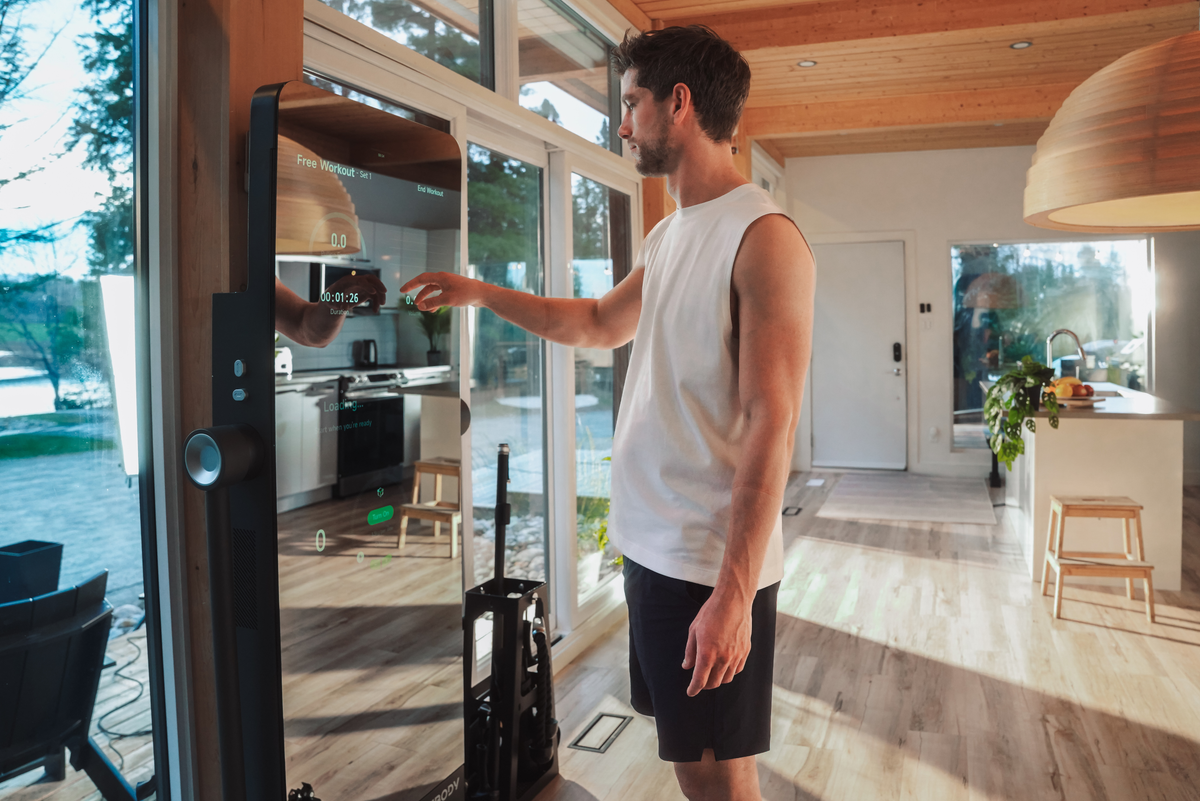
A full-body workout does not require a room filled with separate machines, weight racks, and training stations.
What matters more is whether your setup can support the fundamental movement patterns that train different areas of the body: pushing, pulling, squatting, hinging, and working through different angles and positions.
For home fitness, this creates an opportunity to think differently. Instead of asking how much equipment you can fit into a room, you can ask how many useful movements one system can support.
That is the approach behind IMBODY: bring versatile strength training, intelligent guidance, and connected fitness together in a way that fits naturally into everyday life.
What Makes a Workout “Full Body”?
A full-body workout generally includes movements that involve several major muscle groups within the same training session.

Rather than dedicating an entire workout to one isolated area, a full-body approach can include a combination of:
- Lower-body movements such as squats and hinges
- Upper-body pushing movements
- Upper-body pulling movements
- Core and stability work
- Movements that coordinate multiple areas of the body
The exact exercises can vary based on fitness level, goals, experience, and available time.
For many people training at home, the benefit is flexibility. A well-designed session can address multiple areas of the body without requiring a different machine for every exercise.
Start With Movement Patterns, Not Equipment
Traditional home gym planning often starts with a shopping list.

A rack for one movement. Dumbbells for another. A cable machine for pulling exercises. A bench for pressing. Additional accessories for everything else.
But another way to build a home workout is to start with movement.
Ask what you want your body to be able to do, then choose a system capable of supporting those patterns.
IMBODY Power S combines adjustable smart arms with digital resistance and multiple training accessories, giving users different ways to position resistance around the body.
This makes it possible to move between different exercise patterns within one connected training environment.
Build Around Lower-Body Strength
Lower-body movements form an important part of many full-body strength routines.
Squat and hinge patterns involve some of the body's largest muscle groups and also resemble movements that appear throughout everyday life.
Depending on the user's experience and workout plan, a home session might include variations of:
- Squats
- Split squats
- Deadlift or hinge patterns
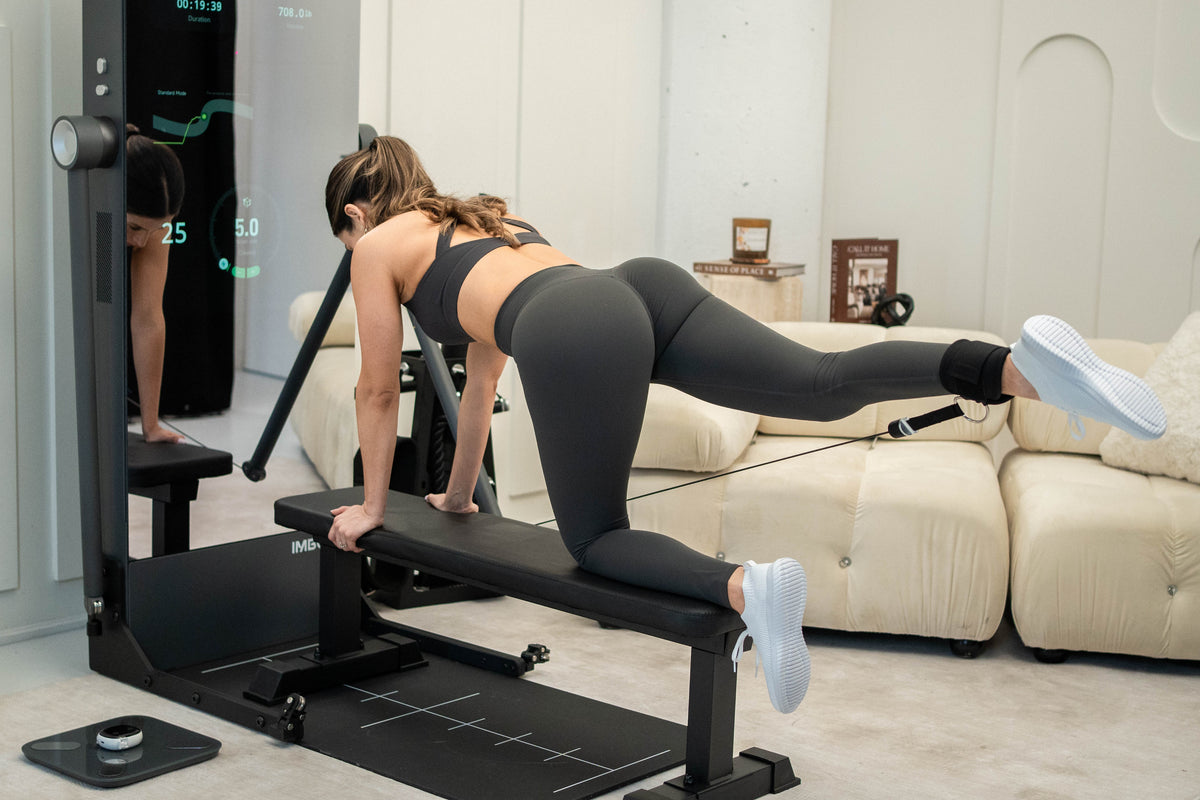
- Lower-body cable movements
With IMBODY Power S, resistance can be adjusted digitally to match the exercise and the individual rather than requiring users to move physical plates between movements.
Add Upper-Body Pushing Movements
Pushing is another fundamental movement pattern.
Depending on the setup, this may include press variations performed from standing, seated, or supported positions.
The adjustable smart arms on IMBODY Power S allow the direction of resistance to change for different exercises, helping one system support multiple movement angles.
This versatility is particularly valuable at home, where dedicating separate equipment to every training angle may not be practical.
Balance Pushing With Pulling
A well-rounded full-body workout can also include pulling movements for the back, arms, and surrounding muscle groups.
Rows and other cable-based pulling patterns can be performed from different positions depending on the exercise and training goal.
Rather than moving between separate strength machines, users can reposition the smart arms and accessories on IMBODY to transition between different movements within the same system.
The goal is not simply to offer more exercises. It is to make variety easier to access without making the home gym more complicated.
Accessories Can Change How One System Moves
One of the advantages of a cable-based digital resistance system is that the training experience can change depending on the attachment being used.

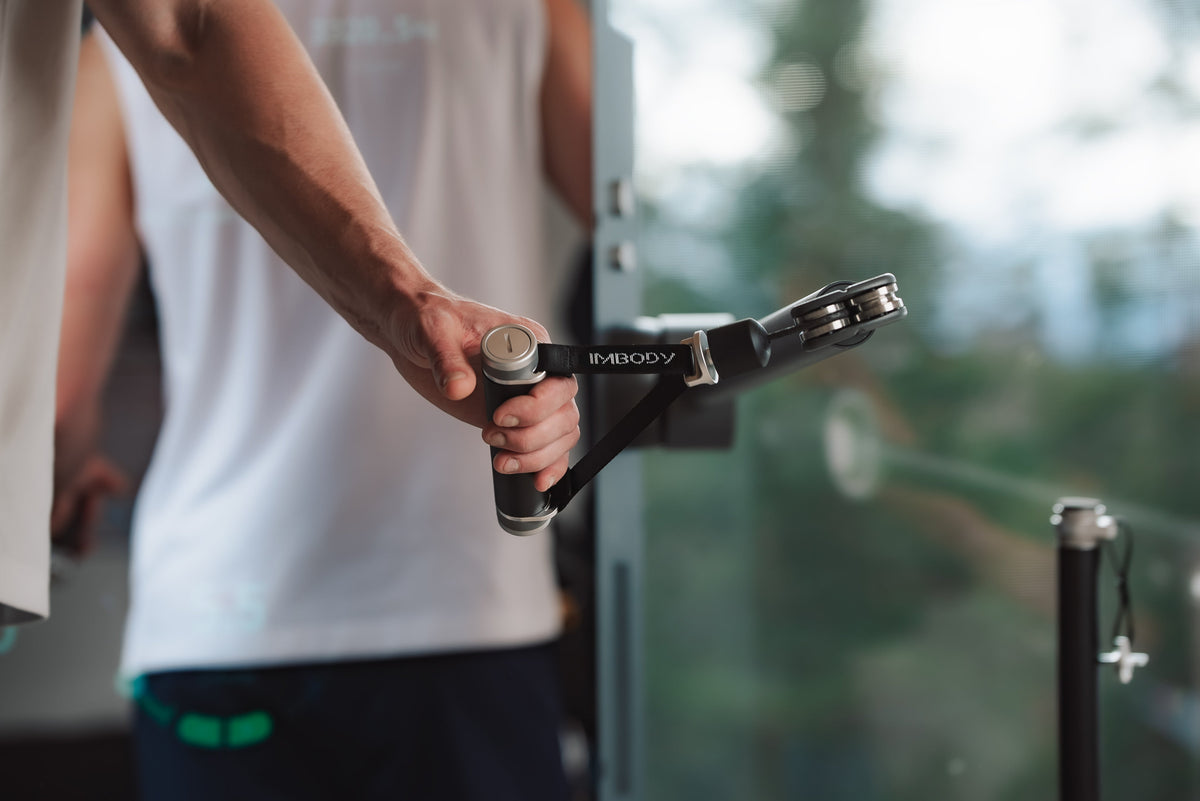
IMBODY Power S works with accessories including the Bluetooth Handle, Barbell Bar, Ankle Straps, Pedal, and Tricep Rope.
Each attachment creates different possibilities for how resistance can be applied.
For example, a bar can support familiar bilateral strength movements, while handles allow the arms to work independently through different positions. Ankle straps can extend resistance training to additional lower-body movements.
This makes accessories part of the system's versatility rather than a collection of separate machines.
Precise Resistance Makes Transitions Easier
Different exercises require very different resistance levels.
The amount of resistance appropriate for a lower-body movement may be much greater than what feels appropriate for an upper-body or accessory exercise.
IMBODY Power S provides up to 260 lbs of digital resistance with adjustments in precise 0.5 kg increments.
This allows users to move between exercises while selecting resistance that better matches each movement.
The value is not simply having a high maximum resistance. It is having a broad range with enough precision to make smaller adjustments when needed.
You Don't Have to Design the Workout Yourself
Having enough exercise options is useful, but it creates another question:
Which movements should I put together?
This is where a connected training system can provide value beyond the hardware.
Through the IAC® intelligent training system, IMBODY can provide workout recommendations based on information such as the user's assessment, fitness goals, and training history.
Instead of choosing exercises and building every full-body session from scratch, users can follow structured training guidance.
The planning becomes simpler, leaving the user with the most important task: move.
A Full-Body Workout Does Not Have to Be a Long Workout
Training multiple areas of the body does not automatically mean spending hours exercising.
A focused session can prioritize a smaller number of useful movement patterns rather than filling the workout with unnecessary exercises.
For someone with limited time, that might mean choosing one lower-body movement, one push, one pull, and complementary movements based on their personalized plan.
The appropriate structure depends on the individual, but the principle remains the same: a workout can be comprehensive without becoming complicated.
Why an All-in-One Approach Makes Sense at Home
Commercial gyms can dedicate hundreds or thousands of square feet to specialized equipment.
Homes have different priorities.
A living environment also needs to remain a living environment.
That makes versatility especially valuable. One training system capable of supporting different resistance levels, movement angles, accessories, guided workouts, and progress tracking can reduce the need to build an entire equipment collection.
IMBODY Power S was designed around this idea: provide a broad training experience without asking fitness equipment to dominate the home.
Full-Body Training Should Support Everyday Life
A full-body workout is not valuable because it checks the largest number of exercises off a list.
It is valuable when it helps build strength and movement capacity that supports the things you want to do outside of training.
That might mean feeling stronger during daily activities, moving with greater confidence, maintaining an active lifestyle, or simply creating a regular relationship with movement.
For IMBODY, this is where home fitness becomes more meaningful.
The workout is not the destination. It is something that supports everything around it.
Final Thoughts
Building a full-body workout at home does not have to mean collecting more equipment.
By focusing on fundamental movement patterns, choosing appropriate resistance, and using a system flexible enough to support different exercises, one training environment can provide a surprisingly broad range of possibilities.
With adjustable smart arms, precise digital resistance, multiple accessories, and intelligent workout guidance, IMBODY Power S brings those elements together in one connected home fitness system.
It is a simpler way to think about a home gym: fewer separate pieces, more ways to move.
Explore IMBODY Power S
Discover how IMBODY Power S combines digital resistance, adjustable smart arms, versatile training accessories, and intelligent workout guidance for full-body strength training at home.
Reference
PubMed Central — Research on Resistance Training and Physical Function
Share:
Why Strength Training Matters More as We Get Older
Why a Compact Home Gym Can Make Consistency Easier