



There is no single workout plan that works equally well for everyone.
Two people can have the same goal and still need very different training. Their starting strength, movement experience, available time, recovery, body data, and workout history may all be different.
That is why personalized fitness plans are becoming an increasingly important part of modern home fitness.
At IMBODY, personalization is not about adding complexity. It is about reducing guesswork and helping users follow a training path that feels more relevant to where they are today.
Why Generic Workout Plans Have Limits
Traditional workout programs often begin with a fixed template.
Everyone follows the same weekly structure, performs the same exercises, and progresses according to the same timeline.
That can be useful as a starting point, but real life rarely follows a fixed template.
One person may be training consistently for years. Another may be returning after a long break. Someone else may only have 20 minutes available on weekdays.
A personalized fitness plan should recognize those differences rather than asking every user to adapt to the same routine.
What Should a Personalized Workout Plan Consider?
A useful personalized workout plan should consider more than a single goal such as "build strength" or "get fit."

It may take into account:
- Current fitness level
- Training goals
- Body assessment information
- Workout history
- Available training time
- Previous progress
- Exercise preferences and experience
The more relevant the plan feels to the individual, the easier it becomes to understand what to do next.
Why Personalization Can Reduce Decision Fatigue
One of the hardest parts of maintaining a fitness routine is often not the workout itself.
It is planning the workout.
What should I train today? Which exercises should I choose? How much resistance should I use? Should today's session be lighter or more challenging?
For busy users, those decisions can create enough friction to delay the workout entirely.
This is where IMBODY uses intelligent guidance to simplify the experience.
Through the IAC® intelligent training system, IMBODY can help recommend training based on the user's assessment, goals, fitness level, and training information.
Instead of beginning each session with a blank page, users have a clearer place to start.
AI Should Support the Plan, Not Become the Point
AI is increasingly being used across fitness apps, wearables, and smart home gym systems.

The American College of Sports Medicine has highlighted the growing role of mobile health technology and AI in creating more personalized fitness plans based on individual data and activity patterns.
But the value of AI is not that it sounds futuristic.
The value is what it helps the user do.
For IMBODY, AI works best when it quietly supports better decisions: helping organize a workout, reducing planning time, and making the training experience feel easier to follow.
The user remains the focus. The technology stays in the background.
Assessment Gives Personalization a Starting Point
A personalized plan needs a starting point.
Within the IMBODY experience, body assessment and user information help create context before training begins.
From there, the system can support a more connected process:
- Assess — understand the user's starting point and goals
- Plan — provide personalized workout recommendations
- Train — follow guided sessions using appropriate resistance and movements
- Track — review training history and progress over time
- Adjust — refine future recommendations as the user's needs evolve
This is more useful than treating every workout as an isolated session.
It helps turn individual workouts into a longer training journey.
Personalization Should Change as You Change
A good fitness plan should not stay exactly the same forever.
As users become stronger, build consistency, change goals, or return after time away, their training needs may change too.
This is one of the advantages of connected smart fitness technology.
Instead of printing one plan and following it indefinitely, a connected system can use training history and progress information to help support more relevant future recommendations.
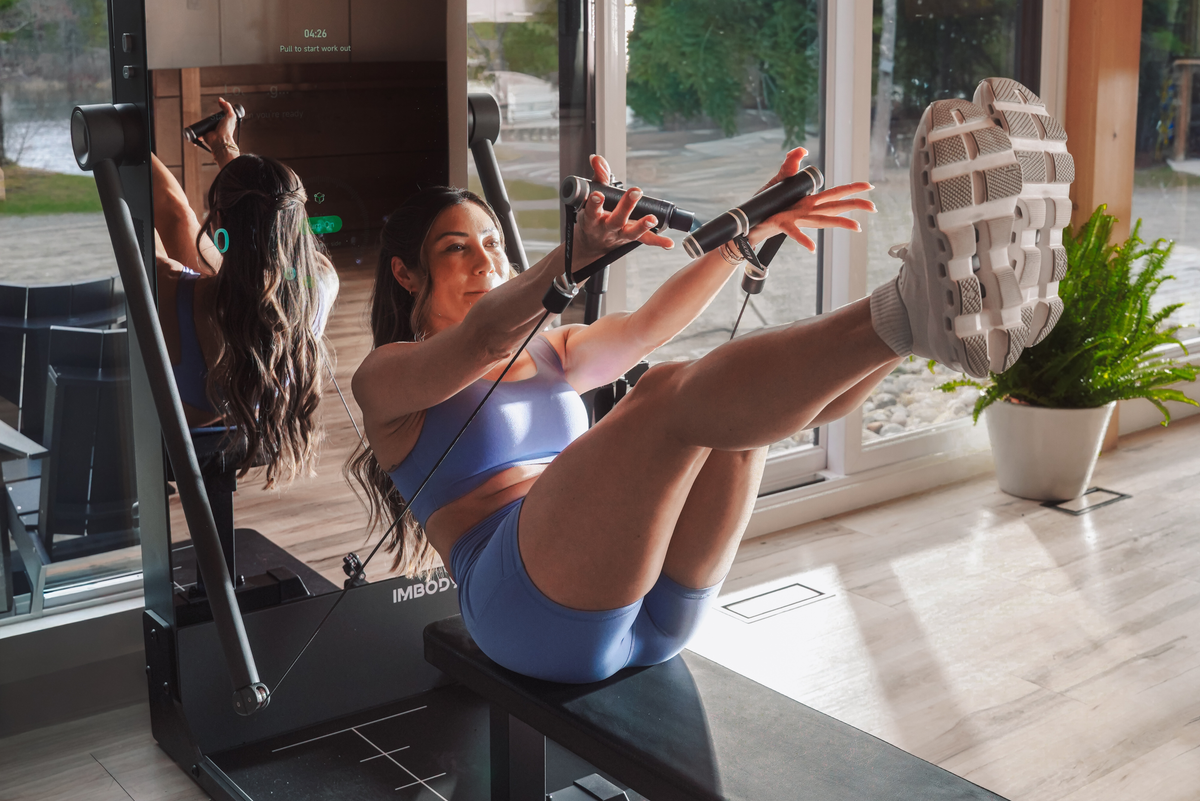
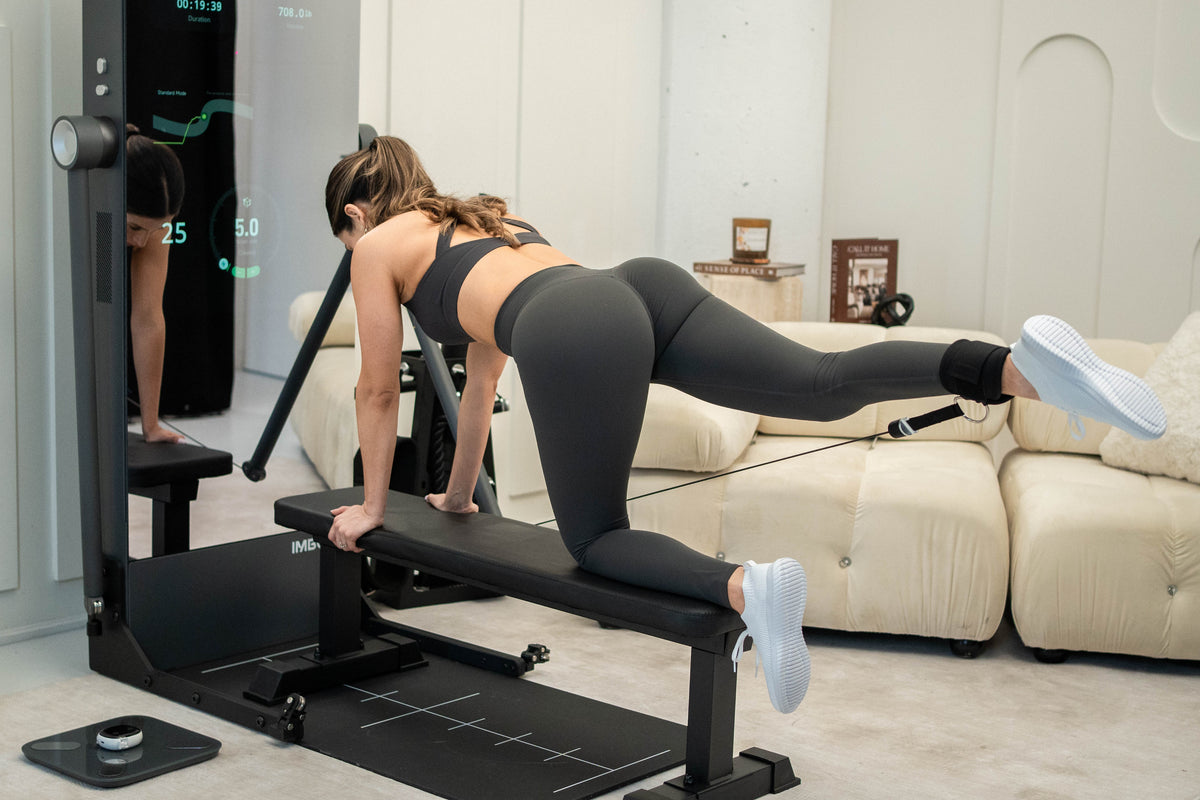
With IMBODY Power S, personalized workout guidance is connected to the same system users train with, helping create a more continuous experience at home.
Resistance Should Be Personal Too
Personalization is not only about exercise selection.
The right resistance is also different for every user and every movement.
IMBODY Power S supports resistance adjustments in precise 0.5 kg increments, allowing users to make smaller changes as their training progresses.
This can make strength training feel more approachable than relying on large jumps between traditional weight increments.
Instead of chasing the highest possible number, users can focus on choosing resistance that fits the movement and their current ability.
Personalized Does Not Mean Complicated
There is an important distinction between personalization and complexity.

A fitness system can collect more data, offer more options, and display more metrics without actually making training easier.
Useful personalization should do the opposite.
It should simplify the next decision.
For IMBODY, the goal is to reduce the amount users need to think about before moving. Guidance should feel clear, supportive, and easy to act on.
Who Benefits From a Personalized Fitness Plan?
Personalized workout planning can be especially valuable for:
- Beginners who are unsure where to start
- Busy professionals who want less planning
- Users returning to fitness after a break
- Households where multiple people have different goals
- People who want a more structured home fitness routine
The common need is not more motivation.
It is a clearer path forward.
Final Thoughts
One routine does not fit everyone because fitness is personal.
Goals differ. Starting points differ. Schedules differ. Progress happens at different speeds.
A personalized fitness plan helps account for those differences while reducing the decisions users need to make on their own.
Through the IAC® intelligent training system, precise digital resistance, body assessment, and connected progress tracking, IMBODY Power S helps create a more guided home fitness experience.
For IMBODY, personalization is not about making fitness more technical.
It is about making the next workout easier to begin.
Explore IMBODY Power S
Discover how IMBODY Power S combines personalized workout guidance, precise digital resistance, body assessment, and connected fitness in one smart home training system.
Reference
American College of Sports Medicine — Personalized Fitness Plans via Mobile Health Technology


Share:
What Is Functional Strength Training — And Why Does It Matter in Everyday Life?
Strength Training for Everyday Life: More Than Building Muscle