


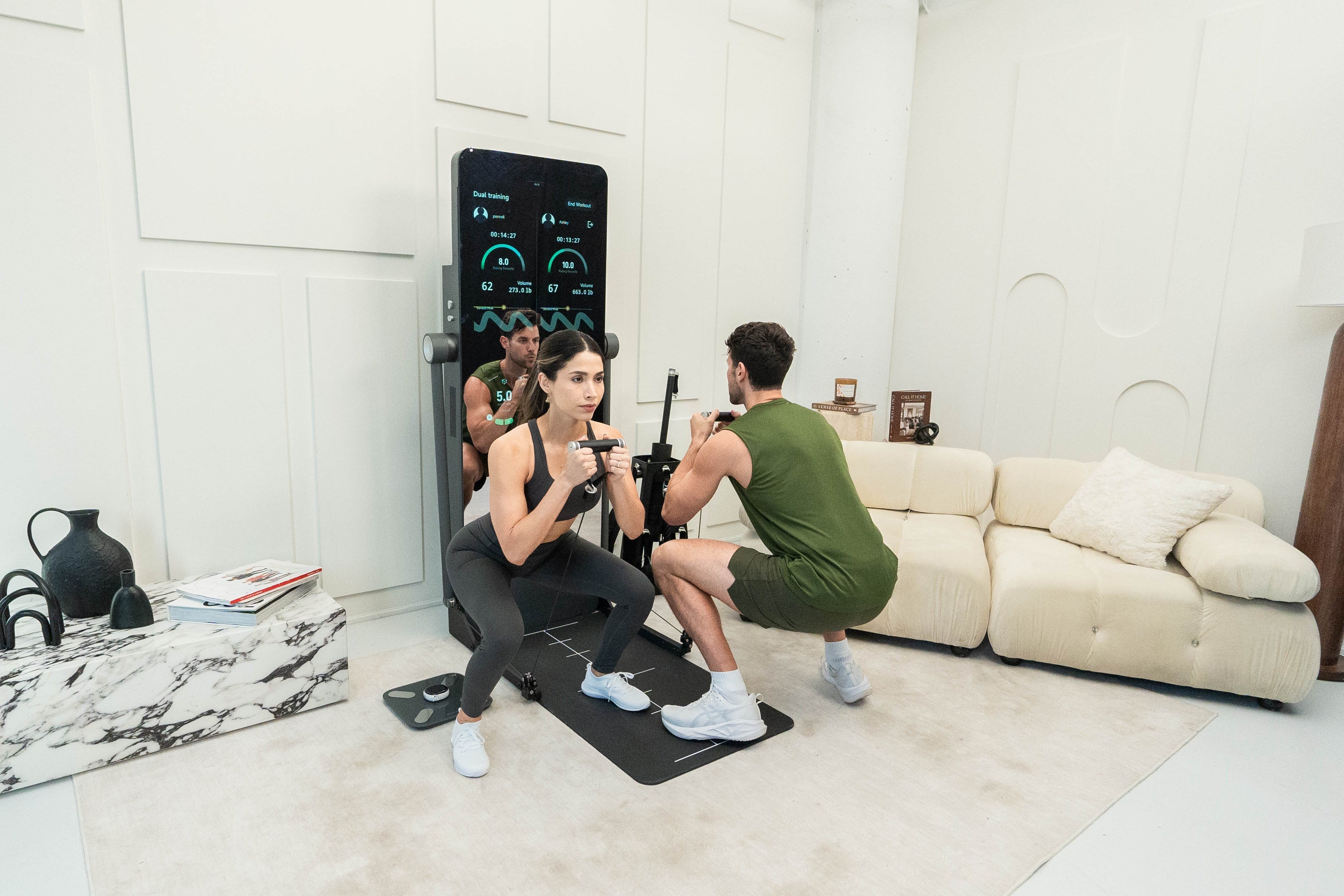
A home gym is often thought of as a personal investment—but for many households, fitness is becoming a shared experience. Whether it's partners working toward different goals, parents finding time to exercise between busy schedules, or family members with different fitness levels, one question comes up frequently:
Can two people comfortably share the same smart home gym?
The answer depends less on the equipment itself and more on how intelligently the system adapts to different users. At IMBODY, home fitness is designed around flexibility, making it easy for multiple people to train within the same ecosystem while maintaining their own personalized experience.
One Home, Different Fitness Goals
No two people train the same way.
One person may be building strength, while another focuses on improving overall wellness. One might prefer shorter weekday workouts, while another enjoys longer weekend sessions.
A shared home gym should support these differences instead of forcing everyone into the same routine.

With IMBODY Power S, each user can maintain an independent profile, allowing workout history, recommendations, and progress tracking to remain personalized.
This creates a more individual experience while still sharing the same hardware.
Personalized Guidance for Every User
Sharing equipment shouldn't mean sharing the same workout plan.
Every person begins from a different starting point, with different strengths, goals, and schedules.
That's why IMBODY integrates the IAC® intelligent training system into every Power S experience.
After each user's initial assessment, the system recommends personalized workout plans based on individual fitness levels, body data, and long-term objectives.
Instead of one generic routine, every household member receives guidance that fits their own journey.
This reduces planning time while making it easier for everyone to stay consistent.
Fitness That Adapts to Real Life
Busy households rarely follow perfect schedules.
One person may train before work. Another may prefer evenings. Weekend workouts might become something you do together.
The value of a smart home gym isn't simply convenience—it's adaptability.

Rather than depending on gym opening hours or coordinating separate memberships, IMBODY allows fitness to fit naturally around each person's daily routine.
This flexibility helps reduce one of the biggest barriers to long-term consistency: finding time.
Progress That Stays Personal
Tracking progress becomes much more meaningful when it's personal.
Instead of comparing yourself with someone else in the household, each user can monitor their own improvements over time.
The IMBODY platform supports an assessment → training → tracking workflow, allowing users to:
- Complete an initial body assessment
- Receive personalized workout recommendations
- Review workout history and progress over time
This approach encourages long-term improvement without creating unnecessary competition.
Progress becomes something you understand—not something you compare.
One System, Many Training Styles
Another advantage of a shared smart home gym is versatility.
Different users often enjoy different training styles.
Some prefer structured strength workouts, while others focus on mobility, recovery, or shorter daily sessions.

Because IMBODY Power S combines digital resistance, intelligent training modes, and guided workouts within one connected platform, it can support a wide range of movement preferences without requiring multiple machines.
This makes it easier for households to invest in one complete solution instead of collecting separate pieces of equipment over time.
A Smarter Use of Space
Space is valuable, especially in modern homes.
Rather than dedicating an entire room to fitness equipment, many families want a solution that integrates naturally into their living environment.
With its slim mirror design, IMBODY combines the functionality of multiple strength-training tools into one elegant system that complements contemporary interiors.
It supports everyday movement without overwhelming the home.
Fitness Can Be Shared Without Being the Same
Research suggests that exercising with a partner or family member can improve long-term exercise adherence by providing encouragement and accountability.
At the same time, successful routines still depend on individual preferences and goals.
A shared smart home gym should support both: the motivation that comes from training together and the personalization that helps each person progress at their own pace.
This balance is central to the IMBODY philosophy.
Final Thoughts
The best home gym isn't designed for just one person—it's designed for real life.
Whether you're training alongside your partner, sharing equipment with family members, or simply supporting one another's wellness goals, IMBODY Power S provides a connected fitness experience that adapts to each individual while bringing everyone together through healthier daily habits.
With personalized guidance, intelligent progress tracking, and thoughtful design, IMBODY helps make home fitness more flexible, more inclusive, and easier to sustain for the entire household.
Explore IMBODY Power S
Discover how IMBODY Power S supports personalized fitness for individuals, couples, and families through intelligent workout guidance, digital resistance, and connected progress tracking.
Reference
Exercise With a Spouse and Long-Term Physical Activity Adherence (PubMed Central)

Share:
Smart Cable Training vs a Traditional Cable Machine: What’s the Difference?
How Much Resistance Do You Really Need in a Home Gym?